
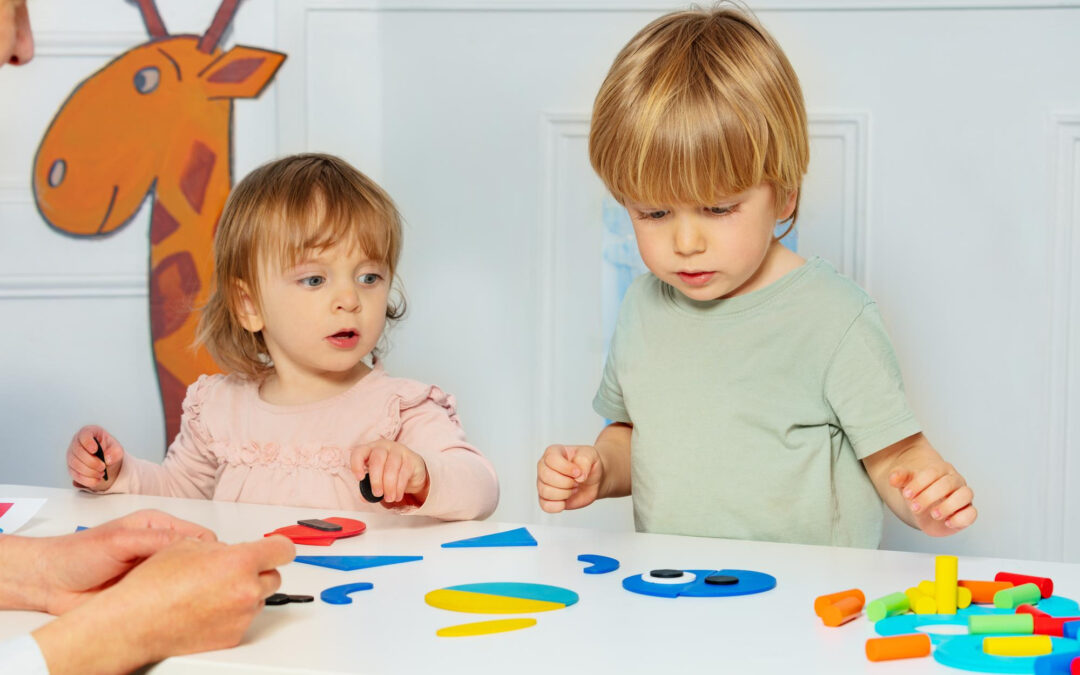
It’s 4:40 p.m., your 2-year-old has just dumped a bin of blocks on the floor for the second time today, and you have maybe ten minutes of patience and zero interest in a Pinterest-worthy setup. That’s the moment this guide is actually for. Activities for 2 year olds. Here’s the direct answer: the “best” activity for a 2-year-old isn’t the most elaborate one — it’s the one that fits your child’s current attention span, your available time, the mess you can tolerate today, and the materials already in your house.
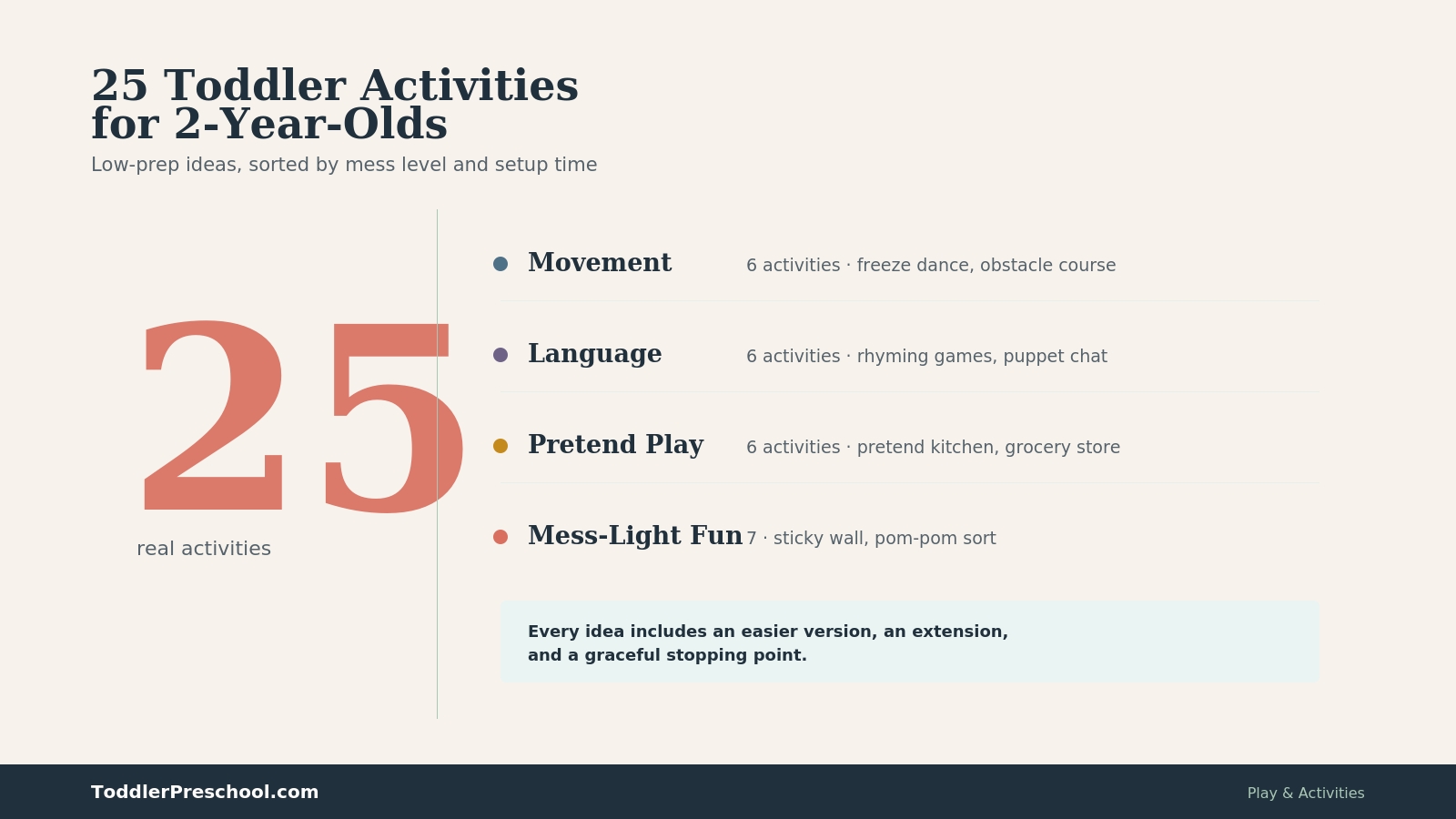
This guide organizes 25 real, low-prep ideas across movement, language, pretend play, and mess-light sensory and art activities, and every single one tells you upfront how long it takes, how messy it gets, how closely to supervise, and — just as importantly — when it’s okay to stop. You don’t need to work through this list in order, and you definitely don’t need to do all 25 this week. Pick one that matches your Tuesday.
How to Use This List
Every activity below uses the same shorthand so you can scan quickly instead of rereading definitions 25 times:
- Best fit: a loose age range, not a deadline. Toddlers vary enormously in attention span, coordination, and interest at this age, and a wider or narrower range than what’s listed is completely normal.
- Time: setup time, then typical active play time. Toddlers often play with something for far less time than adults expect, and that’s fine.
- Mess: None (put it away and you’re done), Low (a damp paper towel handles it), or Medium (a few minutes with a broom, sponge, or wipe-down). Nothing on this list is planned as a bath-required mess — this guide leans mess-light on purpose.
- Supervision: how closely an adult needs to stay involved. “Arm’s reach” means within-touching-distance active supervision, which matters most for anything involving small or breakable pieces (see the safety section below).
- Skills it may support: phrased deliberately as “may,” never as a promise or a checklist item — see the note on this below.
- Easier version, Extension, Stopping point: a way to scale the same activity down, up, or end it early without it feeling like a failure.
A note on “skills it may support”: play doesn’t need to be justified by a developmental outcome to be worth doing, and a 2-year-old doesn’t need to “achieve” anything from stacking cups. Where we mention a skill an activity may touch on, it’s meant as a loose, honest connection — not a claim that this activity builds that skill, and definitely not a substitute for how your child is actually doing. If you have a real question about your child’s development, your pediatrician is the right person to ask, not an activity list.
A Quick Word on Safety and Supervision (activities for 2 year olds)
A few of the ideas below involve small pieces — pom-poms, small toys, cotton swabs — and general guidance from the U.S. Consumer Product Safety Commission is worth keeping in mind for any of them: children under 3 still explore objects with their mouths, and a rough rule of thumb is that anything small enough to fit through an empty toilet paper tube (about 1.25 inches across) is a choking risk and needs close, active supervision or should be skipped for a child who still mouths objects. Balloons are a known choking hazard for young children — if one pops, collect every fragment immediately. None of the activities below require an adult to hover anxiously, but a few genuinely need you within arm’s reach rather than in the next room, and those are labeled clearly.
All 25 Activities at a Glance
| Activity | Category | Best Fit | Mess | Time |
|---|---|---|---|---|
| Freeze Dance | Movement | 18mo–3yr | None | 5–15 min |
| Animal Walk Parade | Movement | 2–3.5yr | None | 5–10 min |
| Pillow & Cushion Obstacle Course | Movement | 18mo–3.5yr | None | 5 min setup, 10–20 min play |
| Bubble Chase | Movement | 12mo–4yr | Low | 1 min setup, 10–15 min play |
| Laundry Basket Pull-Along Ride | Movement | 18mo–3yr | None | 1 min setup, 5–10 min play |
| Copy-Cat Movement Game | Movement | 2–3.5yr | None | 0 min setup, 5–10 min play |
| Point-and-Name House Walk | Language | 12mo–3yr | None | 0 min setup, 5–10 min play |
| Action Songs & Rhymes | Language | 12mo–3.5yr | None | 0 min setup, 5–10 min play |
| Animal Sound Match | Language | 18mo–3yr | None | 0 min setup, 5 min play |
| Sock Puppet Conversation | Language | 18mo–3.5yr | None | 2 min setup, 5–10 min play |
| Family Photo Naming Game | Language | 18mo–3.5yr | None | 3 min setup, 5–10 min play |
| “What Do You See?” Picture Book Game | Language | 12mo–3.5yr | None | 0 min setup, 5–10 min play |
| Pretend Kitchen Cooking | Pretend Play | 2–4yr | Low | 2 min setup, 10–20 min play |
| Doctor Kit Checkup | Pretend Play | 2–4yr | None | 2 min setup, 10–15 min play |
| Grocery Store Shopping Play | Pretend Play | 2–4yr | Low | 5 min setup, 10–20 min play |
| Baby Doll Care Routine | Pretend Play | 18mo–4yr | None | 1 min setup, 10–15 min play |
| Cardboard Box Car or House | Pretend Play | 2–4yr | None | 5 min setup, 15–30 min play |
| Stuffed Animal Tea Party | Pretend Play | 2–4yr | Low | 3 min setup, 10–15 min play |
| Sticky Contact-Paper Wall | Mess-Light | 18mo–3.5yr | Low | 5 min setup, 10–15 min play |
| Stacking Cup Towers | Mess-Light | 12mo–3yr | None | 0 min setup, 5–15 min play |
| Shape Sorter or Simple Puzzle Time | Mess-Light | 18mo–3.5yr | None | 0 min setup, 5–10 min play |
| Pom-Pom Muffin-Tin Sorting | Mess-Light | 2–3.5yr | Low | 2 min setup, 5–10 min play |
| Painted Ice Cube Melt | Mess-Light | 2–4yr | Low | 5 min prep ahead, 10–15 min play |
| Texture Matching Basket | Mess-Light | 18mo–3.5yr | None | 5 min setup, 5–10 min play |
| Bubble Wrap Stomp | Mess-Light | 12mo–4yr | Low | 2 min setup, 5–10 min play |
Movement Activities
1. Freeze Dance
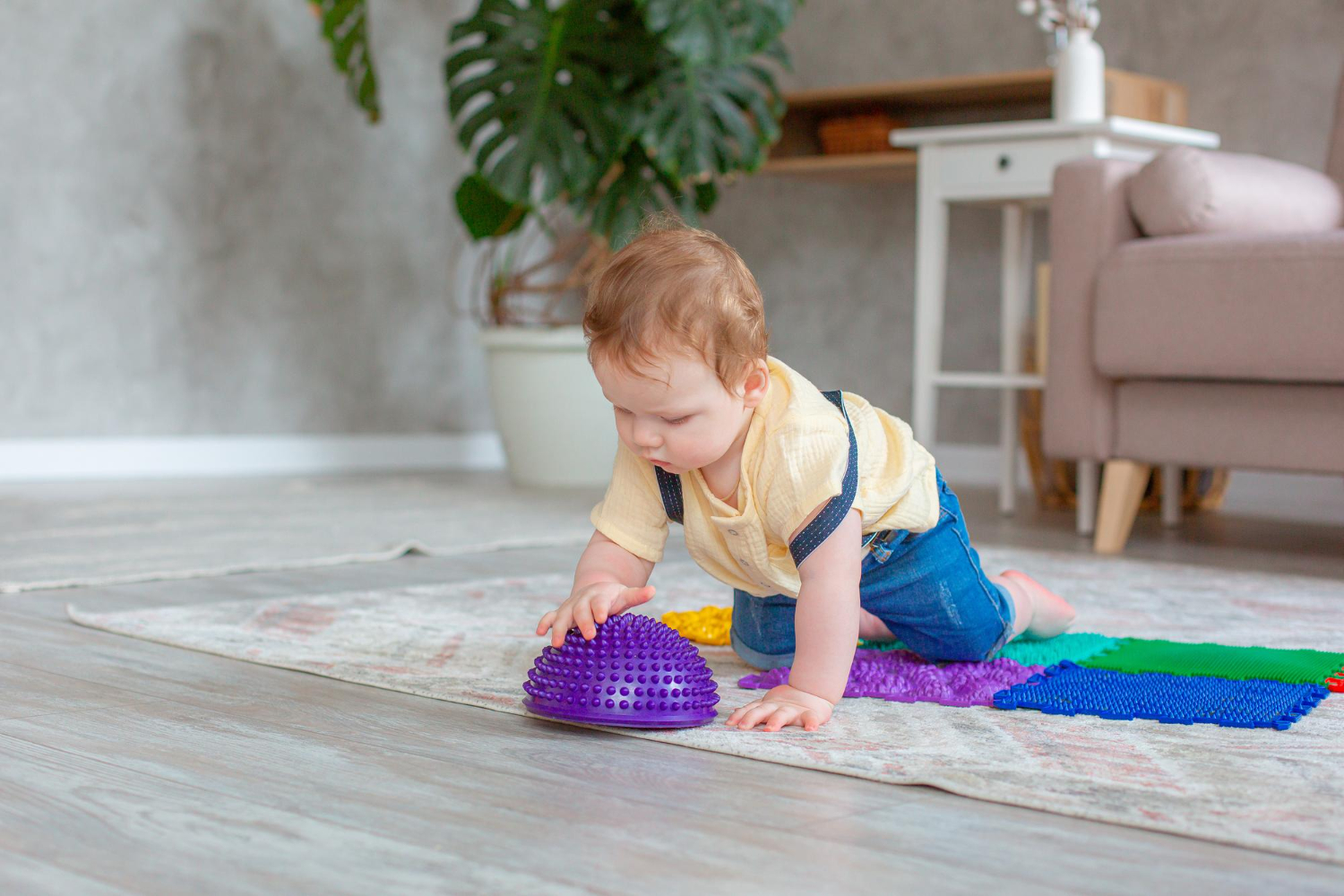
Put on music your child already likes, dance together, and freeze completely when the music stops.
Best fit: 18 months–3 years · Time: no setup, 5–15 minutes · Mess: None · Supervision: Same room; low-risk beyond normal running-around bumps.
Materials & substitutions: Any music source — a phone, a hummed tune works fine if you don’t have a speaker handy.
Steps: 1) Start music and move together. 2) Stop the music suddenly and freeze. 3) Start again and repeat, exaggerating the freeze for laughs.
Skills it may support: listening for a stop cue, whole-body movement control, anticipation and delight in a predictable game pattern.
Easier version: Skip the “freeze” rule entirely and just dance together — the movement itself is the point for a younger or newer-to-the-game toddler. Extension: Add different movement styles between freezes (tiptoe, stomp, spin). Stopping point: One or two songs is a complete activity; there’s no need to “finish” a playlist.
Visual direction: Eye-level, mid-motion action shot — child and adult mid-spin or mid-freeze pose in a living room, arms out, genuine motion blur okay, bright natural light, uncluttered background.
2. Animal Walk Parade
Take turns moving like different animals — bear crawl, frog jump, crab walk, tiptoe like a mouse — down a hallway or across a room.
Best fit: 2–3.5 years · Time: no setup, 5–10 minutes · Mess: None · Supervision: Same room; clear the path of tripping hazards first.
Materials & substitutions: None required. Optional: printed or drawn animal pictures as visual cues.
Steps: 1) Name an animal and show the movement. 2) Move together across the space. 3) Switch animals and repeat.
Skills it may support: gross motor coordination, imitation, vocabulary for animals and action words.
Easier version: Stick to one or two animal movements your child already enjoys rather than cycling through many. Extension: Add animal sounds, or set up a simple “parade route” with a start and finish line. Stopping point: Three or four animals is plenty — stop while it’s still fun, not when everyone’s tired of it.
Visual direction: Wide shot, child mid-crawl or mid-hop on a rug or hallway floor, full body in frame, playful candid expression, home setting with visible floor texture.
3. Pillow & Cushion Obstacle Course
Line up couch cushions, pillows, and a laundry basket to crawl over, around, and through.
Best fit: 18 months–3.5 years · Time: about 5 minutes setup, 10–20 minutes play · Mess: None (just cushions to put back) · Supervision: Arm’s reach if the course includes any climbing or stepping height, since balance is still developing at this age.
Materials & substitutions: Couch cushions, floor pillows, an empty laundry basket, painter’s tape for a “path” if you want one. No special equipment needed.
Steps: 1) Arrange 3–5 obstacles in a simple line. 2) Demonstrate going over, around, or through each one. 3) Let your child lead the second lap.
Skills it may support: balance, gross motor planning, following a simple sequence.
Easier version: Use just one or two obstacles laid flat, with no climbing involved. Extension: Time a “lap” for older or more confident toddlers, or add a stuffed animal to carry through the course. Stopping point: When the course gets knocked over and your child moves on to something else, that’s the natural end — no need to rebuild it.
Visual direction: Overhead or wide angle showing the full course laid out, then a second shot of a toddler mid-crawl through it — natural light, living room setting, cushions in a mix of colors for visual interest.
4. Bubble Chase
Blow bubbles and let your toddler chase, pop, and try blowing their own.
Best fit: 12 months–4 years · Time: about 1 minute setup, 10–15 minutes play · Mess: Low (bubble solution can make floors briefly slippery) · Supervision: Arm’s reach if using a young toddler who might try to drink the solution; otherwise same-room supervision is fine.
Materials & substitutions: A bottle of bubble solution, or a homemade mix of dish soap and water with a pipe cleaner or slotted spoon as a wand.
Steps: 1) Blow a stream of bubbles. 2) Encourage chasing and popping. 3) Offer the wand for your child to try blowing (expect more spilling than bubbles at first, and that’s normal).
Skills it may support: visual tracking, gross motor chasing and reaching, early breath control for blowing.
Easier version: Do this outside, where spills don’t matter at all. Extension: Count bubbles together, or try popping with elbows, feet, or one finger only. Stopping point: When the bottle’s empty or attention wanders, stop — this one rarely needs a formal ending.
Visual direction: Outdoor, golden-hour light, child mid-reach toward floating bubbles, wide shot with visible bubbles catching the light, candid joyful expression.
5. Laundry Basket Pull-Along Ride
Toddler sits in an empty laundry basket; an adult (or older sibling) pulls it gently across a carpeted floor.
Best fit: 18 months–3 years · Time: no setup, 5–10 minutes · Mess: None · Supervision: Arm’s reach — go slowly, and only on carpet or another soft, non-slip surface, never near stairs.
Materials & substitutions: A sturdy plastic laundry basket (avoid any with broken or sharp edges).
Steps: 1) Toddler climbs in and sits down. 2) Adult pulls slowly and steadily. 3) Stop, let them climb out and back in, and repeat.
Skills it may support: core balance while seated, anticipation, taking turns if siblings are involved.
Easier version: Keep pulls short and very slow for a first try. Extension: Add gentle turns or a “destination” (like “let’s ride to the kitchen”). Stopping point: A handful of rides is a full activity — stop before it turns into a request for “more” that’s hard to end.
Visual direction: not included — this one is simple and repetitive enough that a photo brief adds little beyond a straightforward action shot most teams can improvise.
6. Copy-Cat Movement Game
Adult does a simple movement (clap, stomp, spin, touch toes); toddler copies it, then gets a turn to lead.
Best fit: 2–3.5 years · Time: no setup, 5–10 minutes · Mess: None · Supervision: Same room.
Materials & substitutions: None needed.
Steps: 1) Adult does one simple movement. 2) Toddler copies. 3) Swap — toddler leads, adult copies (this part is usually the favorite).
Skills it may support: imitation, body awareness, turn-taking.
Easier version: Stick to movements your child can already do confidently, like clapping or stomping. Extension: Add a simple sequence of two movements in a row once your child has the single-movement version down. Stopping point: Five or six rounds is a good full session — end while your toddler is still leading enthusiastically rather than losing interest.
Language Activities

7. Point-and-Name House Walk
Walk slowly through one or two rooms, pointing at and naming ordinary objects together.
Best fit: 12 months–3 years · Time: no setup, 5–10 minutes · Mess: None · Supervision: Same room.
Materials & substitutions: None — your own home is the material.
Steps: 1) Point at an object and say its name clearly. 2) Pause to let your child repeat or react. 3) Move to the next object, following your child’s interest more than a fixed route.
Skills it may support: vocabulary building, joint attention (looking at the same thing together), early labeling.
Easier version: Focus on just 3–4 favorite or highly familiar objects rather than a whole room. Extension: Add a simple description (“big red ball”) once single words are solid. Stopping point: When your child wanders off to something else, the walk is over — there’s no set number of objects to hit.
Visual direction: Close-up over-the-shoulder shot of an adult’s and toddler’s hands both pointing at the same household object (a lamp, a plant), warm indoor light, genuine everyday home setting rather than a styled one.
8. Action Songs & Rhymes
Sing familiar songs with hand and body motions — “The Wheels on the Bus,” “Itsy Bitsy Spider,” “Head, Shoulders, Knees, and Toes.”
Best fit: 12 months–3.5 years · Time: no setup, 5–10 minutes · Mess: None · Supervision: Same room.
Materials & substitutions: None; a phone or tablet with the song can help if you don’t remember all the words.
Steps: 1) Sing slowly with exaggerated motions. 2) Repeat the same song a few times in a row — repetition is the point, not variety. 3) Pause before a familiar word or motion to see if your child fills it in.
Skills it may support: rhythm and language pattern recognition, gesture-word connections, anticipation.
Easier version: Slow the song way down and focus on just the motions, without worrying about singing every word. Extension: Let your child pick which song comes next, or make up a silly new verse together. Stopping point: One favorite song on repeat for a few minutes is a complete activity.
Visual direction: Wide shot, adult and child facing each other doing hand motions (spider fingers, “so big” arms), natural light, genuine mid-motion moment rather than posed.
9. Animal Sound Match
Say an animal name and pause for your child to make the sound, or make a sound and ask “who says that?”
Best fit: 18 months–3 years · Time: no setup, 5 minutes · Mess: None · Supervision: Same room.
Materials & substitutions: None; toy animals or an animal picture book can add visual support if you have them.
Steps: 1) Say an animal name and pause. 2) Let your child attempt the sound (any approximation counts). 3) Switch roles — you make the sound, they name the animal.
Skills it may support: sound-symbol association, vocabulary, back-and-forth conversational turn-taking.
Easier version: Stick to two or three animals your child already knows well. Extension: Add the animal’s movement too (moo + a cow “walk”). Stopping point: A handful of animals is enough — stop before it turns into a quiz.
10. Sock Puppet Conversation
Put a sock on your hand (or your child’s), give it a name and a voice, and have a simple back-and-forth “conversation.”
Best fit: 18 months–3.5 years · Time: about 2 minutes to make, 5–10 minutes play · Mess: None · Supervision: Same room; avoid gluing on small buttons for eyes given choking risk for this age — draw a face with fabric marker instead, or use felt pieces sewn on securely.
Materials & substitutions: A plain sock; a marker or a couple of secured felt scraps for a face. No sewing required if you just draw the face on.
Steps: 1) Put the sock on your hand and give the puppet a silly voice. 2) Ask the puppet simple questions (“What’s your favorite food?”). 3) Offer your child a turn wearing the puppet.
Skills it may support: back-and-forth communication, imaginative language, comfort talking to (and through) a character.
Easier version: Keep the puppet’s “conversation” to simple yes/no or one-word questions. Extension: Give the puppet a whole pretend day (breakfast, a walk, bedtime) narrated together. Stopping point: A few exchanges is plenty; the sock goes back in the laundry whenever interest fades.
Visual direction: Close-up, hand wearing a simple sock puppet with a drawn-on face, toddler’s hand or face partially in frame reacting to it, soft indoor lighting, playful mood.
11. Family Photo Naming Game
Look through printed photos or a photo album and name family members, pets, and familiar places together.
Best fit: 18 months–3.5 years · Time: about 3 minutes to gather photos, 5–10 minutes play · Mess: None · Supervision: Same room.
Materials & substitutions: Printed photos, a photo album, or a phone/tablet scrolled together (keep sessions short if using a screen, per general AAP guidance on limiting passive screen time at this age).
Steps: 1) Show a photo and name who’s in it. 2) Ask “where’s [name]?” and let your child point. 3) Let your child choose which photo comes next.
Skills it may support: person recognition and naming, joint attention, a sense of connection to family members who aren’t physically present.
Easier version: Use just 4–5 photos of the most familiar people (parents, siblings, grandparents). Extension: Add simple questions about the photo (“What was Grandma doing?”). Stopping point: When your child loses interest in pointing and naming, stop — there’s no need to get through the whole album.
Visual direction: Overhead flat-lay of a small stack of printed photos on a table or floor, toddler’s hand reaching toward one, warm home lighting, real (not stock-perfect) photos visible.
12. “What Do You See?” Picture Book Game
Open any picture book — not necessarily to read the story — and ask “what do you see?” on each page, following your child’s interest.
Best fit: 12 months–3.5 years · Time: no setup, 5–10 minutes · Mess: None · Supervision: Same room.
Materials & substitutions: Any picture book or board book you already own.
Steps: 1) Open to any page. 2) Ask “what do you see?” and wait. 3) Name and describe what your child points to, adding one new word if it feels natural.
Skills it may support: vocabulary, visual attention to detail, comfort with books as an interactive object rather than a passive listening exercise.
Easier version: Stick to one or two favorite, highly familiar pages rather than the whole book. Extension: Ask a simple follow-up question (“what color is it?” or “what sound does it make?”). Stopping point: A few pages is a complete session — this game doesn’t require finishing the book, and skipping around is fine.
Pretend Play Activities (activities for 2 year olds)
13. Pretend Kitchen Cooking
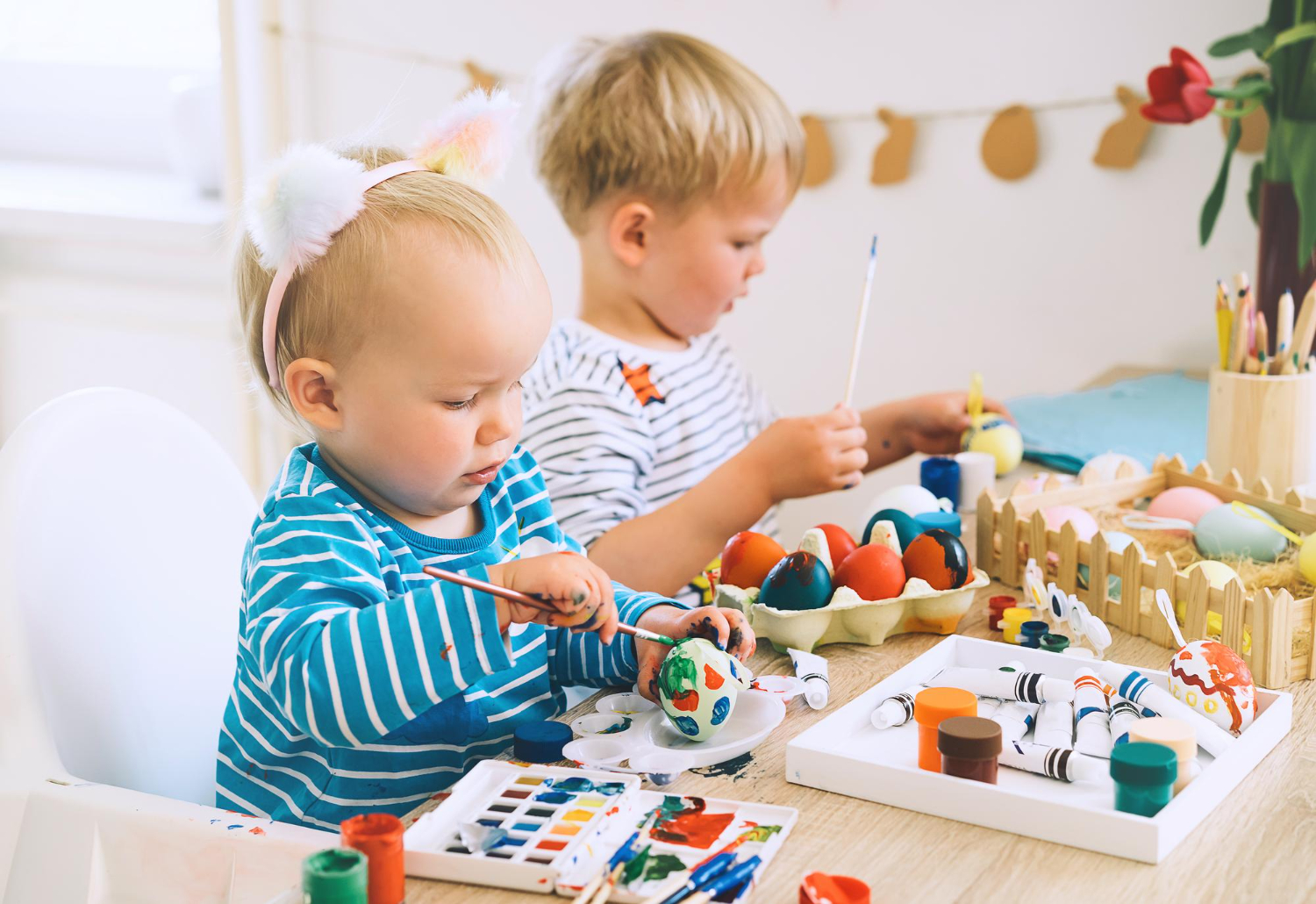
Using a toy kitchen, play food, or real (empty, clean) containers and pots, “cook” a pretend meal together.
Best fit: 2–4 years · Time: about 2 minutes setup, 10–20 minutes play · Mess: Low (mostly just putting items away after) · Supervision: Same room; skip anything with small magnetic play-food pieces for a child who still mouths objects.
Materials & substitutions: A toy kitchen set if you have one, or substitute real empty containers, wooden spoons, and a mixing bowl — no purchase necessary.
Steps: 1) Ask what’s for pretend dinner. 2) “Cook” together, narrating simple steps (“stir, stir, stir”). 3) “Serve” the meal and pretend to eat it together.
Skills it may support: sequencing (steps in an order), imaginative/symbolic play, vocabulary around food and cooking actions.
Easier version: Simplify to just stirring and pouring, without a full “meal” sequence. Extension: Add a pretend grocery list or invite a stuffed animal “guest” to dinner. Stopping point: When the pretend meal is “served” and eaten, that’s a natural, satisfying end point.
Visual direction: Eye-level shot of a toddler at a play kitchen or on the floor with pots and play food, mid-stir with a wooden spoon, genuine concentration expression, home kitchen or playroom setting.
14. Doctor Kit Checkup
Toddler plays doctor, giving “checkups” to a stuffed animal, a doll, or a willing adult.
Best fit: 2–4 years · Time: about 2 minutes setup, 10–15 minutes play · Mess: None · Supervision: Same room; check that any toy kit pieces are sized appropriately (no small parts that fit through a toilet-paper-tube test) for a child still mouthing objects.
Materials & substitutions: A toy doctor kit if you have one, or substitute a spoon (stethoscope), a strip of fabric (bandage), and a flashlight (otoscope) — no kit required.
Steps: 1) Introduce a “patient” (stuffed animal or you). 2) Ask your child to check ears, heart, and give a “prescription.” 3) Take turns being the patient.
Skills it may support: empathy and caregiving role-play, following a simple sequence, vocabulary around body parts and feelings.
Easier version: Focus on just one “checkup” step, like listening to a heartbeat, rather than a full exam sequence. Extension: Add a pretend waiting room with a stuffed-animal line, or a bandage for a pretend “owie.” Stopping point: One or two “patients” seen is a complete visit — no need to treat every stuffed animal in the house.
15. Grocery Store Shopping Play
Set up a pretend “store” with empty food boxes and containers; toddler shops with a small basket or bag.
Best fit: 2–4 years · Time: about 5 minutes setup, 10–20 minutes play · Mess: Low (boxes end up scattered — quick to gather back into a bin) · Supervision: Same room; avoid empty containers with sharp edges (like some metal cans) — stick to boxes and plastic.
Materials & substitutions: Empty, clean food boxes and containers you’d otherwise recycle, a small basket or reusable bag, play money or scrap paper “money” if desired.
Steps: 1) Arrange empty boxes on a shelf or the floor as a “store.” 2) Give your child a basket and invite them to “shop.” 3) “Check out” together at a pretend register (a small table works fine).
Skills it may support: categorization (sorting food types), imaginative play, real-world sequence understanding (shop, then pay).
Easier version: Use just 5–6 boxes rather than a full pantry’s worth. Extension: Add a simple list (“find something red”) or take turns being the shopper and the cashier. Stopping point: One full “shopping trip” is a complete round — the boxes can go right back in the recycling bin after, or get saved in a bin for next time.
Visual direction: Wide shot of a simple pretend store setup — a low shelf or box lined with empty food containers, toddler reaching for one with a small basket in hand, bright natural light, genuine home clutter is fine.
16. Baby Doll Care Routine
Toddler feeds, rocks, and “puts to bed” a baby doll or stuffed animal, mirroring their own daily routine.
Best fit: 18 months–4 years · Time: no setup, 10–15 minutes play · Mess: None · Supervision: Same room.
Materials & substitutions: Any doll or stuffed animal; a small blanket and a toy bottle or bowl if you have them, or substitute a folded washcloth and an empty cup.
Steps: 1) Ask what the “baby” needs. 2) Follow your child’s lead through feeding, rocking, or a pretend nap. 3) Narrate gently alongside them without taking over the play.
Skills it may support: empathy and nurturing role-play, sequencing familiar routines, emotional expression through a stand-in character.
Easier version: Focus on just one step, like rocking, rather than a full care routine. Extension: Add a pretend doctor visit (pairs well with the Doctor Kit Checkup activity above) or a “bedtime” song. Stopping point: When the “baby” is “asleep,” that’s a natural, gentle end.
Visual direction: Soft, close-up shot of toddler’s hands gently holding or rocking a doll or stuffed animal, warm low light suggesting a calm moment, minimal background distraction.
17. Cardboard Box Car or House
A single large cardboard box becomes a car, house, boat, or rocket, decorated or plain.
Best fit: 2–4 years · Time: about 5 minutes setup, 15–30 minutes play · Mess: None (unless decorating with markers, which is Low) · Supervision: Same room; check the box for staples or sharp edges before handing it over.
Materials & substitutions: One large cardboard box (a moving or appliance box works well); markers or crayons optional for decorating.
Steps: 1) Cut simple “windows” or a door if desired (adult task). 2) Let your child climb in and declare what it is. 3) Follow their lead — most of the play happens in their imagination, not in anything you build.
Skills it may support: imaginative and symbolic play, spatial awareness (fitting inside, moving the box), independent/self-directed play.
Easier version: Skip cutting anything — a plain closed-in box is enough for many toddlers. Extension: Add a steering wheel (a paper plate) or turn it into a rotating “theme” over several days. Stopping point: This one has real staying power — it’s fine to let the box live in a corner for days rather than needing a single defined end.
Visual direction: Wide shot, toddler peeking out of or sitting inside a decorated cardboard box, genuine delighted expression, home setting with good natural light, box can be plain or decorated.
18. Stuffed Animal Tea Party
Set up a small pretend tea party with stuffed animals as guests, toy or real (unbreakable) cups, and pretend snacks.
Best fit: 2–4 years · Time: about 3 minutes setup, 10–15 minutes play · Mess: Low (if using real snacks) or None (fully pretend) · Supervision: Same room; if using real small snacks, apply the same choking-hazard sizing caution as any food for this age.
Materials & substitutions: Toy tea set if available, or substitute small plastic cups and a folded towel as a “tablecloth”; stuffed animals as guests.
Steps: 1) Seat 2–3 stuffed animal “guests.” 2) Pour pretend (or real, toddler-safe) tea and snacks. 3) Take turns serving each guest, narrating politeness (“more tea?”).
Skills it may support: social scripts (hosting, sharing, turn-taking), imaginative play, fine motor practice with pouring and passing.
Easier version: Invite just one guest rather than several. Extension: Add simple manners language (“please,” “thank you”) as part of the script. Stopping point: When all the “guests” have been served once, the party is over — no need for seconds.
Visual direction: Overhead flat-lay of a small toy tea set arranged with stuffed animals seated around it, soft natural light, playful color palette, styled but not overly precious.
Mess-Light Sensory & Art Activities (activities for 2 year olds)
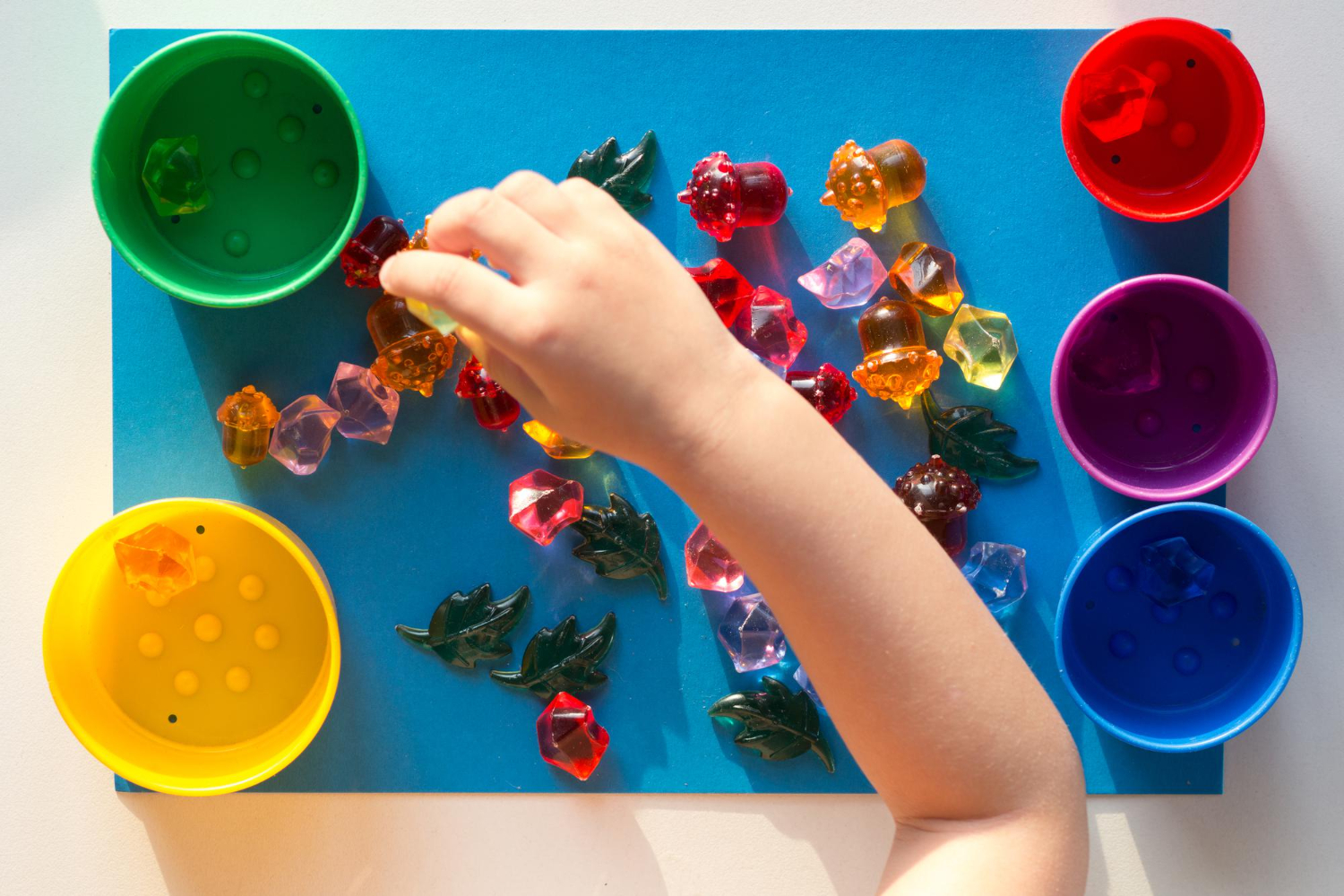
19. Sticky Contact-Paper Wall
Tape a sheet of clear contact paper to a low wall or window, sticky side out, and let your toddler stick on pom-poms, paper scraps, or leaves.
Best fit: 18 months–3.5 years · Time: about 5 minutes setup, 10–15 minutes play · Mess: Low (a few stray scraps to pick up) · Supervision: Arm’s reach if using pom-poms or small paper pieces, since these are a choking risk for a child who still mouths objects.
Materials & substitutions: Clear contact paper, painter’s tape, and pom-poms, torn paper, tissue paper scraps, or leaves collected outside — use whatever’s on hand.
Steps: 1) Tape contact paper sticky-side-out at your child’s height. 2) Offer a small bowl of materials to stick on. 3) Let your child press pieces on and peel them off freely.
Skills it may support: fine motor pincer grasp, cause-and-effect (press and it sticks), color and texture exploration.
Easier version: Use just one type of material (like only pom-poms) rather than a mixed bin. Extension: Sort materials by color into small cups before sticking, or try it a second day with new materials on the same sheet. Stopping point: When the sheet is full or interest fades, take it down — it can be saved as a simple keepsake or tossed without ceremony.
Visual direction: Close-up, toddler’s hand pressing a colorful pom-pom onto a clear sticky sheet against a window with light coming through, bright and graphic, genuine texture visible in the shot.
20. Stacking Cup Towers
Stack plastic cups into a tower; toddler knocks it down (often the best part) and helps rebuild.
Best fit: 12 months–3 years · Time: no setup, 5–15 minutes · Mess: None · Supervision: Same room.
Materials & substitutions: Plastic cups (a toddler stacking-cup toy, or just reused kitchen cups of a similar size).
Steps: 1) Stack cups into a small tower. 2) Encourage — or simply wait for — the knock-down. 3) Rebuild together, letting your child add cups as they’re able.
Skills it may support: fine motor control (placing, not just grasping), cause-and-effect, early counting if you count cups aloud together.
Easier version: Start with just 2–3 cups rather than a tall tower. Extension: Try stacking by size (biggest on bottom) or building two towers to compare heights. Stopping point: This one naturally resets itself every time it falls — stop whenever, no ceremony needed.
Visual direction: Overhead flat-lay of colorful cups mid-stack on a wood floor or table, toddler’s hand placing the top cup, clean simple background, bright even lighting.
21. Shape Sorter or Simple Puzzle Time
Work through a shape sorter toy or a simple chunky-piece puzzle together.
Best fit: 18 months–3.5 years · Time: no setup, 5–10 minutes · Mess: None · Supervision: Same room; standard age-appropriate toy applies (avoid puzzles or sorters designed for older kids with small, detachable pieces).
Materials & substitutions: A shape sorter or chunky wooden/foam puzzle appropriate for this age.
Steps: 1) Offer one piece at a time rather than dumping them all out at once, if your child gets overwhelmed easily. 2) Narrate the shape and where it might go. 3) Let your child attempt placement before stepping in to help.
Skills it may support: shape recognition, problem-solving through trial and error, fine motor precision.
Easier version: Do just 3–4 pieces in one sitting rather than the whole set. Extension: Name the shape’s color too, or time how fast you can do it together for an older, more coordinated toddler. Stopping point: When frustration starts to outweigh interest, stop there — this is a great one to set down mid-puzzle and return to later.
22. Pom-Pom Muffin-Tin Sorting
Sort colored pom-poms into the matching-colored cups of a muffin tin using fingers or child-safe tongs.
Best fit: 2–3.5 years · Time: about 2 minutes setup, 5–10 minutes play · Mess: Low (stray pom-poms roll around) · Supervision: Arm’s reach — pom-poms are a genuine choking hazard for a child who still mouths objects, so this one is not appropriate to leave unattended even briefly.
Materials & substitutions: A muffin tin, colored pom-poms (or substitute colored pasta, cotton balls, or small blocks — anything sortable by color that you have on hand).
Steps: 1) Color-mark each muffin cup (a small dot of marker or a colored sticker). 2) Offer a bowl of mixed pom-poms. 3) Sort together by color, naming each color aloud.
Skills it may support: color matching, fine motor pincer grasp, early sorting/categorization logic.
Easier version: Use just two colors instead of a full rainbow. Extension: Introduce child-safe tongs or a small scoop instead of fingers for extra fine motor challenge. Stopping point: However many cups get filled is enough — there’s no requirement to finish the whole tin.
Visual direction: Overhead flat-lay of a muffin tin with colorful pom-poms, toddler’s hand mid-sort, clean bright background, satisfying color-coded visual for a Pinterest-style pin.
23. Painted Ice Cube Melt
Freeze colored ice cubes (water plus a few drops of food coloring) and let your toddler “paint” with them as they melt on a tray.
Best fit: 2–4 years · Time: about 5 minutes prep the night before, 10–15 minutes play · Mess: Low (contained to a tray, though hands and the tray edge get colorful) · Supervision: Same room.
Materials & substitutions: An ice cube tray, water, food coloring, and a large tray or baking sheet with sides to contain drips. No food coloring on hand? Plain ice cubes still offer a good sensory melt experience without the color element.
Steps: 1) Freeze colored ice cubes ahead of time. 2) Place a cube or two on a tray with a big sheet of paper. 3) Let your child push the melting cube around to “paint,” refreezing leftover cubes for next time if needed.
Skills it may support: sensory exploration (cold, wet, slippery), cause-and-effect, color mixing if multiple colors overlap.
Easier version: Use just one color and a smaller tray for a shorter, lower-stimulation version. Extension: Try mixing two colors together on the paper and naming the new color that results. Stopping point: When the cube fully melts, the activity naturally ends — no need to refreeze and start another round if attention has moved on.
Visual direction: Overhead close-up of colorful melting ice cubes leaving trails on white paper, toddler’s hand pushing a cube, bright saturated colors, wet texture clearly visible.
24. Texture Matching Basket
Gather a small basket of household items with different textures (soft, bumpy, smooth, fuzzy) and explore or match them by feel.
Best fit: 18 months–3.5 years · Time: about 5 minutes setup, 5–10 minutes play · Mess: None · Supervision: Same room; choose items too large to be a choking risk.
Materials & substitutions: A soft washcloth, a smooth stone (large enough to fail the toilet-paper-tube test), a piece of bubble wrap, a cotton ball, a fabric scrap — whatever textured, safely sized items are around the house.
Steps: 1) Lay out 4–6 items in a basket or on a tray. 2) Name each texture as your child touches it (“soft,” “bumpy,” “smooth”). 3) Optionally, find a matching pair of each texture for a simple matching game.
Skills it may support: tactile exploration, descriptive vocabulary, early categorization by a physical property rather than just an object name.
Easier version: Offer just 2–3 items rather than a full basket. Extension: Try the game with eyes closed (or a light cloth over the items) for an older toddler, guessing the texture by feel alone. Stopping point: When your child has handled everything once or twice, that’s a complete round.
Visual direction: Overhead flat-lay of a small woven basket or tray with 4-6 varied-texture items, toddler’s hand reaching for one, neutral warm background, textures visibly distinct in the photo.
25. Bubble Wrap Stomp
Lay a sheet of bubble wrap on the floor and let your toddler stomp, jump, or crawl across it to pop the bubbles.
Best fit: 12 months–4 years · Time: about 2 minutes setup, 5–10 minutes play · Mess: Low (occasional small plastic fragments if the wrap tears — sweep up afterward) · Supervision: Arm’s reach for younger toddlers who might try to peel off and mouth a torn piece of plastic.
Materials & substitutions: A sheet of bubble wrap (packaging you already have on hand works perfectly); optionally taped down at the edges to prevent sliding.
Steps: 1) Lay the bubble wrap flat and tape down the edges. 2) Invite stomping, jumping, or crawling across it. 3) Flip to a fresh section or add a new sheet if the popping runs out.
Skills it may support: gross motor movement, sensory feedback (sound and sensation of popping), cause-and-effect.
Easier version: Let a younger toddler simply press bubbles with their hands while seated, rather than standing and stomping. Extension: Turn it into a simple obstacle to cross toward a goal, or race to pop a whole row. Stopping point: Once most of the bubbles are popped, the activity is naturally done — no need to hunt for stragglers.
Adapting for Every Family, activities for 2 year olds
These activities are meant to flex, not to be followed exactly as written. The National Association for the Education of Young Children frames developmentally appropriate practice as play-based learning that’s also culturally, linguistically, and individually responsive to the specific child in front of you — not a fixed script every family runs the same way, and that idea applies directly here.
Multilingual families. Every language-focused activity above works in any language your family speaks at home — point-and-name, songs, and picture book games don’t require English specifically, and switching between languages during play is a strength, not something to correct or avoid.
Disability and developmental variation. Several activities include an “easier version” specifically because attention span, motor skills, and sensory preferences vary widely among 2-year-olds for all kinds of reasons, not just age. If your child uses mobility equipment, has sensory sensitivities, or is working with an early interventionist or therapist, most of these ideas can be adapted with their input — a therapist working with your family is a better source for individualized modifications than any general list.
Different family structures and caregivers. Nothing here requires two adults, a specific relationship to the child, or even one dedicated adult at a time — an older sibling, grandparent, or any consistent caregiver can lead any of these just as well.
Budget. Every single activity on this list uses materials most households already have, or substitutes that cost nothing — cardboard boxes, socks, empty containers, and couch cushions do real work here. None of this requires a purchase to attempt tonight.
Time and schedule. If you only have five minutes, pick something from the “no setup” column in the at-a-glance table above. If today just isn’t a play-project kind of day, that’s a completely normal parenting day, not a missed opportunity — there will be other Tuesdays.
Frequently Asked Questions
My 2-year-old loses interest after two minutes — is that normal, or should these activities hold their attention longer? Very short attention spans are typical at this age, and it’s common for a “10–15 minute” activity to actually run 3 minutes in your living room. That’s not a sign anything is wrong with the activity or your child — toddler attention naturally builds gradually over the next couple of years, and repeating a short activity often works better than trying to stretch one out.
Do I need to buy special toddler activity supplies to do any of this? No — every activity above was deliberately chosen to work with household items, recycling-bin materials, or things families commonly already own. A handful (contact paper, an ice cube tray) may need a small one-time purchase if you don’t have them, but nothing here requires ongoing supply spending.
What if my child wants to do the same activity every single day? That’s extremely common at this age and is a completely fine way to play — repetition is how toddlers build mastery and comfort with a skill, not a sign they’re “stuck.” Rotate in something new when you’re ready, not because the repetition itself is a problem.
Your One Next Step
Look at the “At a Glance” table above, pick one activity with “no setup” listed, and try it in the next 20 minutes — before you have time to overthink it.
Sources consulted: National Association for the Education of Young Children — Defining Developmentally Appropriate Practice; U.S. Consumer Product Safety Commission — public guidance on choking hazards and small-parts sizing for children under 3; Centers for Disease Control and Prevention — Learn the Signs. Act Early. 24-month milestone checklist, used only as loose, non-diagnostic context for the “skills it may support” notes above.