
You’ve seen the photos: a toddler in a flannel shirt, holding one perfect apple, golden light everywhere. You’re planning apple picking with toddlers because you want that morning too. But you also want to know what actually happens when a real toddler meets a real orchard, bathroom lines and all.
Here’s the direct answer. Apple picking with toddlers goes best when you plan around four real things. Orchard safety. Snack timing. Bathroom logistics. Expectations that match an actual toddler’s attention span, not a Pinterest board. This guide walks through a simple preparation timeline, the safety details worth knowing before you go, and what to actually pack. The goal: a day that stays enjoyable, not one long transition.
None of this requires an elaborate plan for apple picking with toddlers. Most of what actually matters here is genuinely simple, just not obvious until you’ve already lived through a rough version of the day once.
The Direct Answer: What Actually Makes This Trip Work
A good apple-picking trip with a toddler isn’t about picking the most apples or getting the perfect photo. It’s about matching the visit’s length, pace, and demands to what your specific toddler can realistically handle that day.
Most of what goes wrong on this kind of outing traces back to one thing. An adult’s plan is built around an adult’s stamina, not a toddler’s. This guide is built the other way around.
A toddler doesn’t care about maximizing the visit, filling every basket, or hitting every attraction on the property. They care about the very next five minutes, and building your plan around that reality tends to produce a genuinely better day for everyone.
Apple Picking With Toddlers: The 60-Day Preparation Timeline
Planning early for apple picking with toddlers doesn’t mean overplanning. A little lead time just means fewer surprises on the actual day.
60 Days Out: The Big Decisions
This is the point to pick a general weekend. Choose between a simple local farm and a bigger destination orchard. Decide roughly what you want from the day. A toddler generally does better at a smaller, quieter operation than a large, crowded destination farm with buses of visitors.
Check your chosen orchard’s website, or call directly, to ask about toddler-specific concerns. Stroller access, bathroom facilities, typical crowd levels. This gives you real information to plan around, rather than guessing.
This early window is also a good time to loop in any other adults who might join. Coordinate schedules well before the specific weekend fills up with other commitments.
30 Days Out: Logistics and Gear
This is a reasonable point to check what gear you already own versus what you might need. A baby carrier, if strollers won’t work well on the terrain. Weather-appropriate layers. Closed-toe shoes with good grip for everyone.
If a hayride, corn maze, or other paid activity is part of your plan, check whether advance tickets are recommended. This avoids arriving to find that specific piece already sold out.
Check your toddler’s current shoe size against last season’s closed-toe shoes too. Feet grow quickly, and a too-small shoe on uneven terrain genuinely matters for both comfort and safety.
14 Days Out: Confirming the Plan
Check the forecast loosely at this point, without over-relying on a two-week-out prediction. This helps you start thinking about backup dates, if your first choice turns out to be a wash. This is also a good time to mention the outing to your toddler in simple, low-pressure terms. Don’t build up excessive anticipation for a day that might not go exactly as imagined.
This is roughly the halfway mark of your planning window. It’s a natural point to check that your original plan still fits your family’s current situation, energy, and schedule.
Final Week: Practical Prep
Confirm the actual forecast now, since it’s finally close enough to be reliable. Pack a bag the night before: snacks, water, a change of clothes, anything specific to your toddler’s needs. This keeps the morning of feeling calm, rather than rushed.
This is also a reasonable point to gather the specific safety items covered later in this guide, like a small paring knife for safely cutting apples ahead of time. Nothing gets forgotten this way in a last-minute scramble.
Day Of: Keeping It Simple
Go to the bathroom at home before you leave, even if no one seems to need to. This is a genuinely useful habit, given what orchard bathroom facilities often look like, covered in detail later in this guide. Build in a flexible mindset from the start, rather than a fixed itinerary. This sets you up to follow your toddler’s actual energy, rather than fighting it.
Arrive with a loose plan, rather than a rigid schedule of every activity in order. This leaves room to skip whatever isn’t working, and linger longer wherever your toddler is genuinely engaged.
Understanding Apple Varieties and Seasonal Timing
A little background helps you plan a visit that actually matches what’s available at the specific orchard you choose to visit this year.
Different Varieties Ripen at Different Times
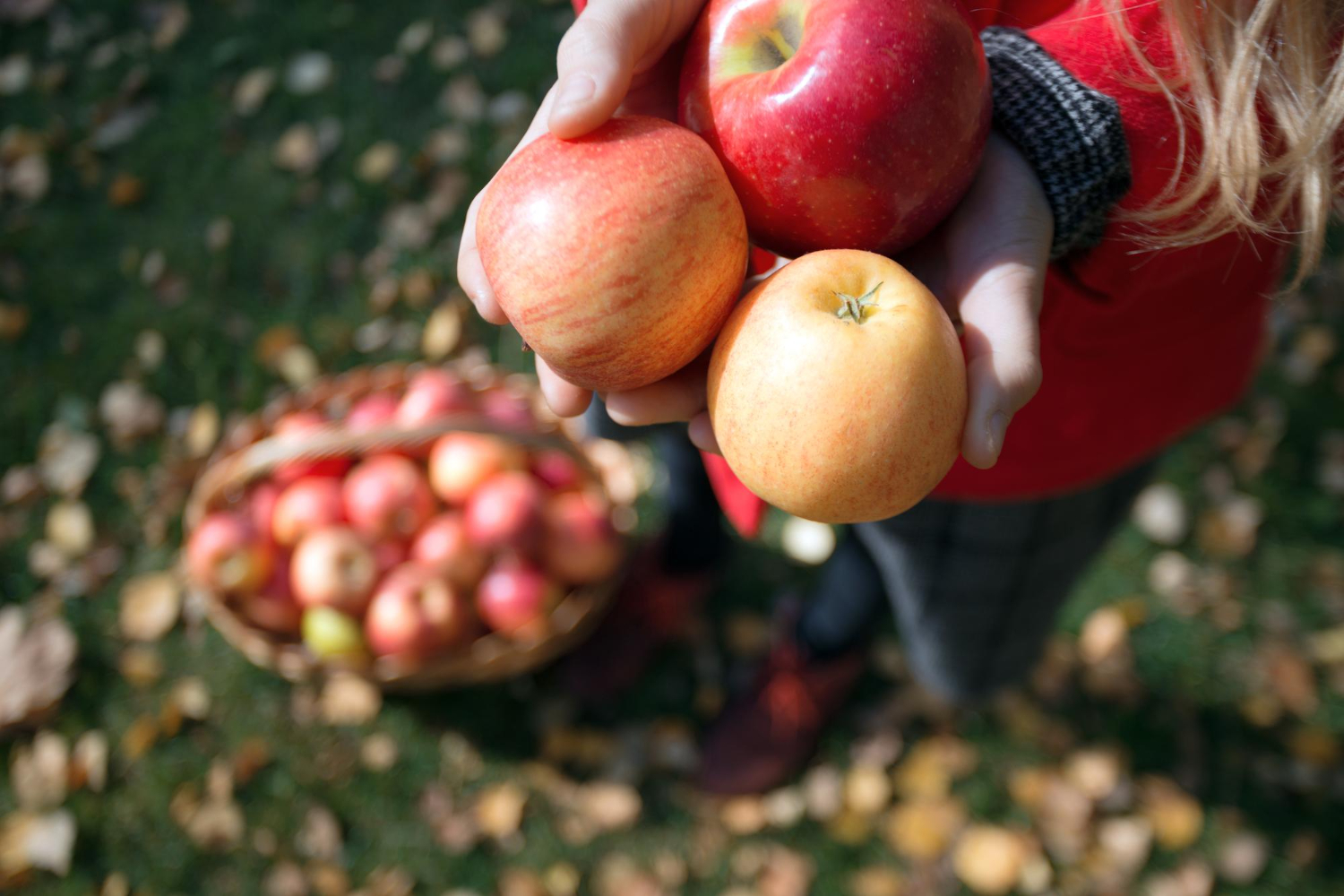
Apple season isn’t a single moment. Different varieties ripen across a multi-week or even multi-month window, from late summer through fall depending on your region. Checking which specific varieties your target orchard currently has ready avoids arriving to find your favorite type already finished for the season.
Choosing Varieties a Toddler Might Actually Enjoy
Sweeter, milder varieties tend to appeal more to a young child’s palate than intensely tart ones. Ask orchard staff directly which variety they’d recommend for a young child’s taste. This is a reasonable, welcomed question most staff are happy to answer, and it often leads to a genuinely good recommendation.
Regional Timing Varies Significantly
Apple harvest timing shifts meaningfully by region, with northern growing areas often starting and ending earlier than warmer southern regions. Check your specific region’s typical harvest window, rather than assuming a national average timeline. This helps you plan a visit during the actual peak, rather than at the very start or tail end.
Why Timing Affects the Toddler Experience Specifically
Early season visits often mean smaller, less ripe fruit still developing. Very late season visits sometimes mean picked-over trees with less accessible low-hanging fruit. A visit during the genuine peak window typically offers the easiest, most rewarding picking experience for a toddler’s shorter reach and limited patience. Low, easily reachable fruit matters more than variety selection at this age.
Petting Zoos and Farm Animals
Many orchards include a small petting zoo or farm animal area as part of the broader visit, worth a few specific notes since this part of the day often surprises first-time visitors.
Genuine Appeal for Toddlers
Farm animals are often a genuine highlight for a toddler, sometimes even more engaging than the apple picking itself. Build in real time for this specific part of the visit, rather than treating it as a quick afterthought. It respects where your toddler’s actual interest often lands, even if that means most of your total visit time.
Basic Animal Safety
Supervise closely during any animal interaction, and model gentle, calm touches rather than grabbing or chasing. This keeps things safe and positive for both your toddler and the animals themselves.
Handwashing After Animal Contact
Wash or sanitize hands after touching farm animals, before any subsequent eating or snacking. This is a reasonable, standard hygiene practice worth building into your visit’s rhythm, especially given how much of this outing revolves around eating.
Choosing the Right Orchard for a Toddler
Not every orchard is equally well suited to a family with a young child, and a little research upfront makes a genuine difference in how the whole day actually unfolds.
Small and Local Versus Large and Destination
A smaller, local farm often means shorter lines, more relaxed pacing, and staff who are more accustomed to accommodating a toddler’s unpredictable needs. A large, well-known destination orchard offers more attractions but often comes with correspondingly larger crowds, longer waits, and a less flexible overall experience.
Reading Reviews With a Toddler-Specific Lens
Search recent reviews specifically for mentions of “toddler,” “stroller,” or “bathroom.” This often surfaces genuinely useful, practical detail that a general star rating alone won’t capture. Other parents who’ve made this exact trip recently are a genuinely valuable source of current, specific information. You won’t find this on the orchard’s own marketing materials.
Considering Drive Time Honestly
A shorter drive matters more with a toddler than it might with older children. There’s the practical reason of nap timing, and the simple reality that a toddler’s patience for car time is often limited. Choosing a closer, simpler orchard over a farther, more elaborate one is a completely reasonable trade-off. It’s often the one that actually produces a better day overall.
Calling Ahead When Information Online Is Thin
Many smaller orchards have limited websites or social media presence. A quick phone call answers questions no webpage will cover: current bathroom setup, whether strollers work on their terrain, and how crowded a given time tends to be.
Apple Picking With Toddlers: Safety at the Orchard
A few specific safety considerations for apple picking with toddlers are worth understanding before you go, not figured out in the moment.
Whole Apples Are a Choking Risk for Young Children
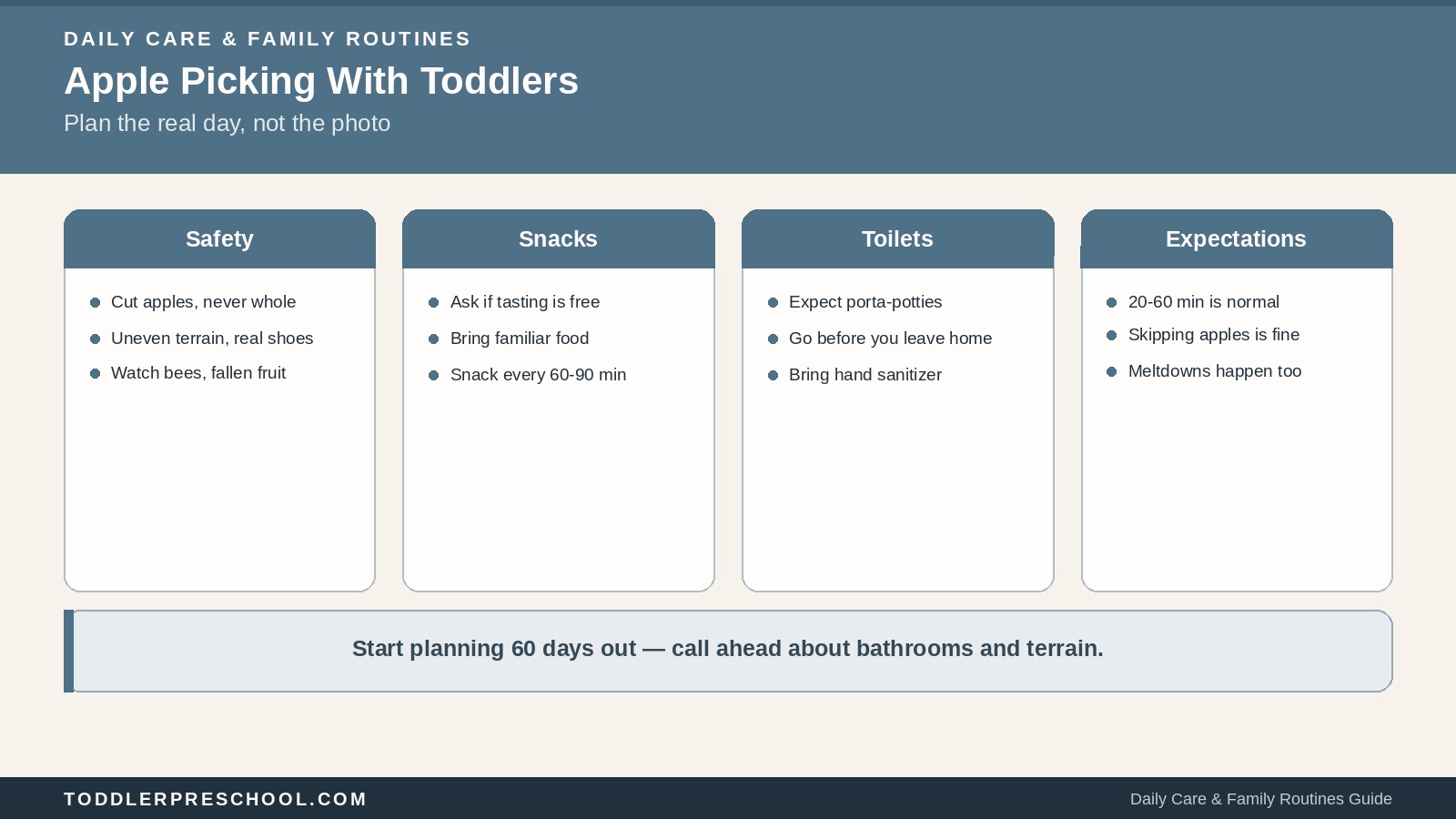
This is worth stating plainly. Whole, firm, round foods, including whole apples, are a recognized choking hazard for children under about 4, per standard pediatric choking-prevention guidance. Cut an apple into thin slices, or at minimum into smaller wedges, rather than letting a toddler bite directly from a whole apple. This is a reasonable precaution both at the orchard and at home afterward.
This matters specifically at an orchard. Fresh, whole apples are everywhere, and offering a taste feels like the most natural thing in the world. Bringing a small paring knife, or asking staff if they have one available at a tasting station, lets you offer a taste safely.
This same precaution applies to apple slices from a tasting station or gift shop sample, not just apples picked directly from the tree. A firm, unsliced apple piece large enough to require biting off a chunk carries the same underlying risk, regardless of where it came from.
Uneven Terrain and Orchard Ground
Orchard ground is often uneven, sometimes muddy, and rarely stroller-friendly in the way a paved path would be. A toddler who’s a confident walker on flat ground may need more hand-holding or carrying than usual across this kind of terrain.
Closed-toe shoes with real tread matter here, more than sandals or slip-on shoes would. Loose gravel, fallen apples, and genuinely uneven dirt rows between trees all call for real traction.
Roots, low branches, and irrigation equipment sometimes cross walking paths in working orchards. Watch for these specifically, since a toddler’s eye level and attention naturally focus on the fruit, not the ground ahead.
Hayrides and Tractor-Pulled Attractions
If your visit includes a hayride or tractor-pulled wagon, keep a toddler seated and held, rather than standing or wandering the wagon bed. This matters for real safety, not just general caution. These rides move over uneven ground and can jostle unexpectedly.
Asking staff directly about their specific safety expectations for young children before boarding is a reasonable, normal question, not an overcautious one.
Boarding and exiting the wagon itself is often the moment requiring the closest supervision. A moving or not-yet-secured wagon presents a genuine fall risk for small hands and feet navigating an unfamiliar step height.
Sun, Heat, and Weather Exposure
Orchards offer limited shade in many spots, and a fall day can still bring real sun exposure even with cooler air temperatures. Sunscreen, a hat, and regular water offers matter even on a day that doesn’t feel like classic summer heat.
Conversely, a genuinely cold or windy fall day calls for real layers. A toddler standing around while adults chat with orchard staff gets cold faster than an actively moving adult does.
Check the specific day’s forecast for both temperature and wind chill, rather than just the general daytime high. This gives a more accurate picture of what your toddler will actually experience standing in an open field.
Bees, Wasps, and Fallen Fruit
Fallen, rotting apples on the ground attract bees and wasps, especially later in the season. Keeping a toddler from stepping in or sitting near a pile of fallen fruit reduces this specific risk meaningfully.
If your child has a known insect sting allergy, bring any prescribed emergency medication. Confirm you know exactly where it is before you leave the car. This is a reasonable, serious precaution for this outdoor setting.
Fermenting fallen fruit on the ground can also attract more bees than usual on a warm, late-season day. Keep this in mind if your visit falls later in the harvest window.
Reaching Poles and Picking Tools
Some orchards offer long-handled picking poles or baskets with clippers for reaching higher fruit. These tools are generally not appropriate for toddler use directly. An adult using the tool, while a toddler holds the basket or simply watches, is a safer, more realistic division of roles.
A toddler genuinely enjoys being handed the picked apple to place in the basket themselves. This is a satisfying, safe way to include them, without needing to handle a tool directly.
Keeping Track of a Toddler in an Open Space
An orchard is a large, open, often crowded space with many similar rows of trees. It’s genuinely easy for a toddler to slip out of sight for a moment. Bright, easily spotted clothing, and a clear agreed-upon plan with any other adults present about who’s watching whom, both help.
Some families find a simple ID bracelet with a phone number gives real peace of mind. So does a photo of the day’s outfit taken at the car. Nothing elaborate is needed.
Agree on a specific, memorable meeting point before you separate into different rows or activities. This gives everyone a clear plan if you do get briefly separated in a crowd.
Food Allergies
If your toddler has a known food allergy, confirm directly with orchard staff. Ask whether any tasting stations, cider, or baked goods might involve cross-contact with a specific allergen. Don’t assume either way. Bringing your own safe snacks, covered in the next section, sidesteps this concern for the actual picking portion of the visit.
A farm environment specifically can carry additional cross-contact risk beyond a typical grocery store or restaurant. This comes simply from the amount of shared equipment and hand-to-food contact happening throughout the day.
Apple Picking With Toddlers: Snacks and Feeding Logistics
Food logistics matter more at an orchard than almost any other family outing, given how much of the experience revolves around eating.
Is the Fruit Tasting Actually Free
Policies vary significantly by orchard. Some genuinely allow tasting apples straight from the trees as part of the experience. Others expect you to pay for anything eaten, including a bite taken mid-row. Asking directly at check-in avoids an awkward moment later.
Some orchards specifically restrict tasting to a designated tasting table with pre-cut samples, rather than allowing tastes from the trees themselves. This is both a food safety and inventory measure. Knowing this ahead of time helps you set clear expectations with your toddler about which apples are for looking and which are for eating.
Bringing Your Own Snacks
Pack familiar, reliable snacks from home, rather than relying entirely on what’s available for purchase. This is a reasonable, low-cost strategy that also sidesteps any allergy or picky-eating concerns. A small cooler bag in the car makes this easy to manage even on a warm day.
Choose snacks your toddler already knows and likes, rather than trying something new during an already stimulating outing. This reduces one more variable that could go sideways during the visit.
Timing Snacks to Prevent Meltdowns
Offer a snack before your toddler is genuinely hungry, rather than waiting for clear hunger signs. This tends to prevent the specific kind of meltdown that ends an outing early. A snack roughly every 60 to 90 minutes works as a reasonable default rhythm for many toddlers during an active outing.
Build a snack break into your loose plan, rather than treating it as an interruption. This makes it easier to actually follow through, rather than pushing past the point your toddler can handle.
Managing a Toddler Who Wants to Eat Every Apple They Touch
This is extremely common and worth planning for directly, rather than being surprised by it. Decide in advance on a simple, consistent rule. Try “we taste one, then we put the rest in the basket.” Repeat it calmly and consistently. This works better than negotiating fresh with every single apple.
A toddler testing this rule repeatedly isn’t being defiant. They’re doing exactly what toddlers do when a new, appealing rule is introduced. Calm, repeated consistency, rather than escalating frustration, tends to get through faster.
Apple Cider and Cider Donuts
Many orchards sell fresh cider and cider donuts as a genuine highlight of the visit. Check whether cider is pasteurized if you have any specific health concerns. Some smaller operations sell unpasteurized cider, which carries different food safety considerations than the pasteurized version sold in most grocery stores.
A warm cider donut, still fresh from frying, is often a genuinely exciting moment for a toddler. It’s worth budgeting a few extra minutes for, even in an otherwise efficient visit.
Managing Overall Sugar and Excitement
A day that includes cider, donuts, and other treats sold on-site can add up to more sugar than an ordinary day. Factor this into your expectations for energy levels and potential meltdowns later. This isn’t a reason to skip these treats entirely; it’s simply useful context for understanding an unusually wound-up toddler on the drive home.
Apple Picking With Toddlers: Toilets and Bathroom Logistics
This is genuinely one of the most practical, least glamorous parts of planning this trip, and it deserves real attention.
What Kind of Bathroom Facilities to Expect
Facilities vary enormously by orchard. Some have a real indoor bathroom in a farm store. Others have a bank of portable toilets in a field, sometimes with no facilities at all nearby. Calling ahead or checking recent reviews specifically for bathroom information is a reasonable, practical step.
Recent customer reviews, especially ones mentioning families with young children specifically, often give more honest, current bathroom information. This beats an orchard’s own marketing materials.
Porta-Potties and Toddlers
A portable toilet can feel genuinely alarming to a toddler. It’s dark, loud when the door closes, has an unfamiliar smell, and a much larger opening than they’re used to. If this is likely to be your only option, mentioning it to your toddler beforehand in simple terms can reduce the surprise.
Bring your own hand sanitizer too. Portable toilets often lack real handwashing facilities, so this is a reasonable addition to your bag.
Practice with a description beforehand. Try “it’s a different kind of bathroom, kind of like a little room.” This tends to reduce resistance, compared to surprising your toddler with an unfamiliar setup in the moment.
If You’re Actively Potty Training
An orchard visit during active potty training deserves specific thought. Bringing a portable, familiar potty seat insert is one option. Sticking to pull-ups for the outing itself, if that’s your normal backup, is another. Timing the visit around your toddler’s typical bathroom rhythm works too.
Scouting out exactly where the bathroom is located as soon as you arrive, before you’re actually in a hurry, saves real stress later.
A day like this, with unfamiliar bathrooms and a break from routine, is a completely reasonable one to temporarily loosen your usual potty training approach. It won’t undo overall progress. One outing doesn’t reset weeks of consistent practice.
Diaper Changing Stations, or the Lack of Them
Many orchard bathroom setups, especially portable toilets, don’t include a diaper changing station. Bring a portable changing pad, and plan to use your car’s trunk or back seat as a backup changing spot. This is a reasonable, common workaround.
Park relatively close to the main facilities, if the orchard’s layout allows it. This keeps the backup option genuinely convenient, rather than a long walk away when you actually need it.
A Simple Bathroom Backup Plan
Know where your car is parked relative to the bathroom. Have a mental “if this takes too long” backup plan, whether that’s your car or a nearby indoor store. This reduces the stress of managing this logistic in the moment.
Ask a staff member directly: “where’s the closest bathroom from here.” Do this the moment you sense your toddler might need one soon. It’s always a reasonable question, even if it feels like an interruption.
Apple Picking With Toddlers: Realistic Expectations
A few honest notes about what this outing actually looks like with a real toddler, compared to the version in your head.
How Long a Toddler Actually Lasts
Many toddlers genuinely engage with active outdoor picking for somewhere between 20 minutes and an hour. This depends on temperament, nap timing, and how novel the experience feels. Plan for a shorter core activity, with the rest of your visit as flexible bonus time. This sets more realistic expectations than assuming a full, leisurely afternoon.
This window shrinks further on a hot day, a cold day, or a day following a short nap or skipped nap entirely. Building in genuine flexibility to end early, rather than treating the full visit as mandatory, respects this real variability.
The Pinterest Photo Versus the Real Experience
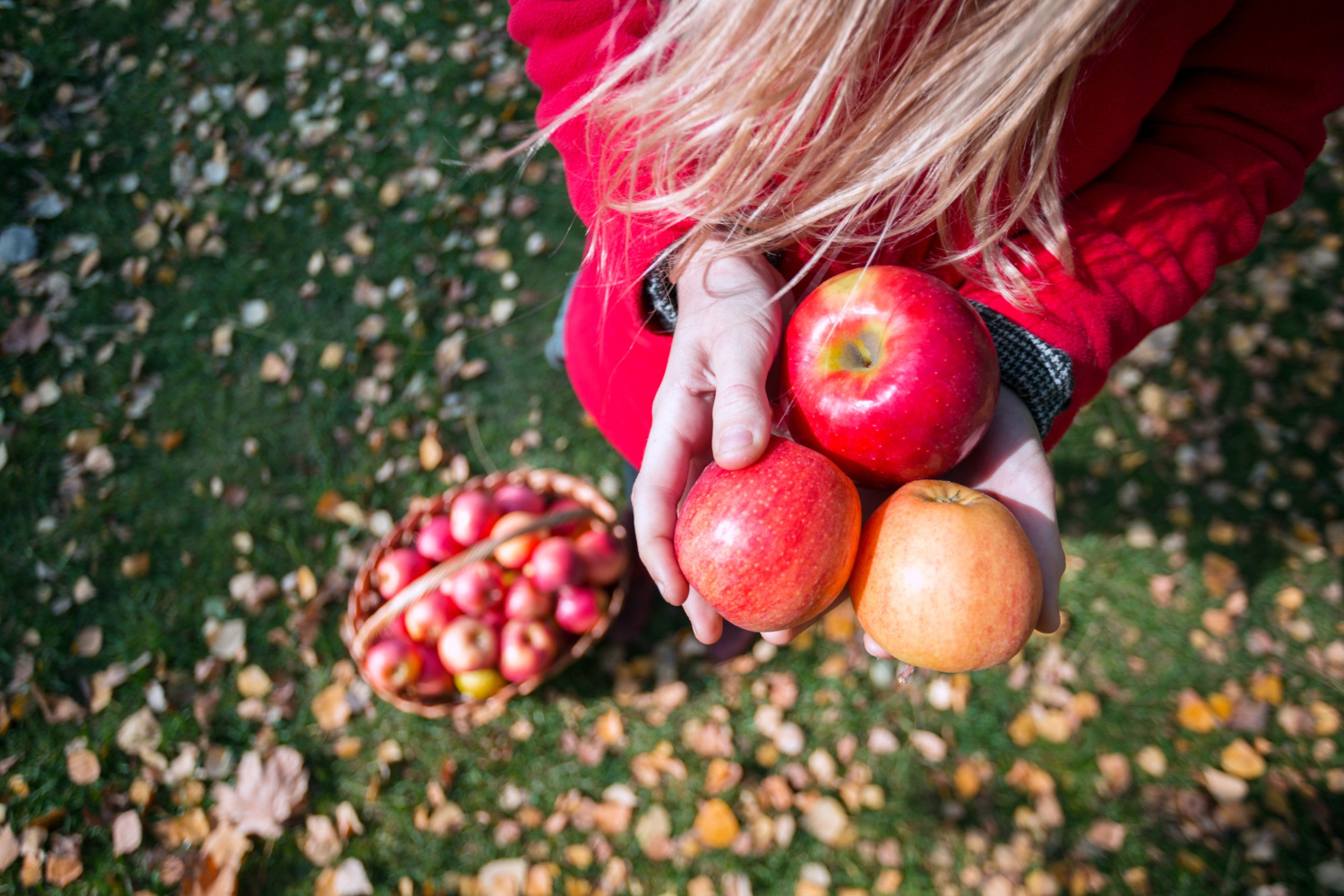
A single, perfectly lit photo of a calm toddler holding one apple rarely shows the full picture. The fifteen minutes of resistance. The dropped snack. The diaper change right before or after. Expect your own real visit to include genuine, unphotogenic moments alongside the good ones. This is a far more useful mindset than chasing a single perfect image.
Take a few photos naturally throughout the visit, rather than stopping to stage one perfect shot. This tends to capture more authentic, ultimately more meaningful moments.
Managing Meltdowns in a Public, Outdoor Setting
A meltdown at an orchard isn’t fundamentally different from a meltdown anywhere else, though the outdoor, semi-public setting can make it feel more exposed. Have a simple, practiced response ready: moving to a quieter spot, offering a snack or water, or simply waiting it out calmly. This matters more than trying to prevent every single meltdown.
Other families at the orchard have almost certainly experienced their own version of this same moment, whether this visit or a past one. A toddler meltdown in this specific setting draws far less genuine judgment than it might feel like in the moment.
It’s Okay If You Don’t Pick a Single Apple
The point of the visit, developmentally speaking, is the sensory experience, the outdoor time, and the family moment. It’s not a specific quota of harvested fruit. A visit where your toddler mostly wanted to look at goats, or throw fallen apples, still counts as a successful outing.
Let go of a specific picking goal in advance, rather than discovering that disappointment mid-visit. This makes it genuinely easier to follow your toddler’s actual interest wherever it leads.
Cost Expectations
Most orchards charge by the pound, or by a set container size, for apples you pick. Separate admission or activity fees often apply for hayrides, corn mazes, or other attractions. Decide on a rough budget before you arrive. Communicate it to any other adults along for the visit. This avoids surprise at checkout.
A family visit with a toddler often means eating or dropping several apples along the way, beyond what makes it home in the basket. This is a normal, expected part of the cost, not a sign anything went wrong.
Weather Reality Versus the Ideal Fall Day
The picture-perfect, crisp autumn day with brilliant foliage doesn’t happen on every single visit. Waiting for absolutely ideal conditions can mean missing the visit entirely during a short harvest window. A slightly warm day, an overcast sky, or a bit of wind rarely ruins the actual experience. A toddler is mostly focused on what’s right in front of them anyway.
Dressing a Toddler for an Orchard Visit
Clothing choices matter more here than for many other outings, given the mix of activity, weather exposure, and general mess involved.
Layering Works Better Than a Single Outfit Choice
Fall weather genuinely shifts across a single morning, from a chilly start to a warmer midday. A base layer plus an easily removable jacket lets you adjust as the day warms up. This beats committing to one temperature guess at the start.
Choosing Clothes You Don’t Mind Getting Dirty
Mud, grass stains, and dropped food are all genuinely likely during this specific outing. Choosing older, already-worn clothes, rather than something new or precious, removes one more source of stress from the day.
Real Shoes, Not Just Comfortable Ones
Closed-toe shoes with actual tread matter more here than typical everyday comfort shoes might. A toddler running or walking across uneven, sometimes muddy orchard ground benefits genuinely from real traction, not just general comfort. A slip on loose gravel or a fallen apple is a real, avoidable risk.
A Spare Layer in the Car
Even with good planning, weather can shift unexpectedly, or a toddler might get wetter or dirtier than anticipated. Keeping one spare layer in the car, beyond whatever’s already in your packed bag, adds a genuinely useful safety net.
What to Bring: A Simple Packing List
A focused, realistic list rather than an exhaustive one, built around what actually matters for this specific kind of outdoor, food-heavy family outing.
For safety and comfort: closed-toe shoes with good tread, layers appropriate for the forecast, sunscreen, a hat, and insect sting medication if relevant to your family.
For snacks and hydration: familiar snacks from home, a refillable water bottle, and a small paring knife if you plan to offer apple tastes safely cut into pieces.
For bathroom logistics: hand sanitizer, a portable changing pad if needed, and extra wipes.
For general toddler management: a small first aid kit, a change of clothes, and a comfort item if your toddler has one they’d want along.
For the adults: cash or a card for admission and extra activities, your phone charged for photos and emergencies, and realistic expectations, the most important item on this entire list.
Why a Change of Clothes Matters More Here Than Usual
Mud, dropped snacks, cider spills, and an unexpected diaper leak all become more likely during an active, outdoor, food-heavy outing. An ordinary day at home carries far less risk. A full spare outfit, not just a spare shirt, genuinely earns its space in the bag for this specific kind of trip.
Keeping the Bag Itself Manageable
A single, well-organized bag that one adult can carry comfortably works better than several smaller bags scattered across different hands and pockets. Managing gear while also managing a toddler on uneven ground is genuinely harder than it sounds. Simplicity here pays off throughout the visit, especially once your hands are already full of apples, baskets, or a tired toddler.
Managing the Car Ride There and Back
The drive itself is a real part of this outing’s logistics, worth its own brief consideration, especially for families driving any real distance to reach an orchard.
Timing the Drive Around Nap Potential
A drive that happens to align with a typical nap window sometimes turns into a genuine, helpful nap in the car. This shouldn’t be your only rest plan for the day, though. Either way, plan the drive time consciously, rather than as an afterthought. This helps the whole day’s timing hang together more smoothly from start to finish.
Packing Car-Specific Entertainment and Snacks
A few familiar toys, books, or snacks kept specifically for the car ride, separate from what’s going into the orchard, help. They smooth over what’s often a tedious stretch for a toddler eager to arrive.
The Ride Home Often Looks Different
A toddler who was energetic on the way there is often noticeably more tired on the drive home, and sometimes more prone to a meltdown. Building in a little extra patience and lower expectations for this return trip specifically helps manage this common, predictable, entirely normal pattern.
Scheduling the Visit Around Naps and Routine
Timing the visit itself, beyond just the day of the week, genuinely affects how it goes, sometimes more than any other single planning decision you make.
Working Around an Existing Nap Schedule
A morning visit, timed to end before a typical nap window begins, tends to work better than an afternoon visit. An afternoon visit either conflicts with nap time or follows a groggy wake-up. Check your toddler’s current nap schedule, and plan the outing’s timing around it, rather than the reverse. This respects a real physiological need that no amount of enthusiasm can override.
If Your Toddler Has Recently Dropped Their Nap
For a toddler in the transition period between napping and not napping, an earlier, shorter visit still tends to work better than a long afternoon outing overall. Overall stamina is often lower during this specific developmental transition.
Building in Recovery Time Afterward
An active, stimulating outing like this often leaves a toddler genuinely more tired than usual. This can mean an earlier bedtime, or a rougher-than-normal evening. Plan a quieter rest of the day afterward, rather than stacking additional activities on top. This respects the real fatigue and sets everyone up for a smoother transition into the evening.
Weekday Versus Weekend Visits
Timing your visit within the week itself, not just within the season, genuinely affects the experience, sometimes more than the specific orchard you choose.
Weekday Mornings Tend to Be Calmest
If your schedule allows a weekday visit, particularly a weekday morning, crowds are typically noticeably smaller than weekend visits, especially weekend afternoons. This translates directly into shorter lines, more relaxed staff, and generally more room for a toddler to move and explore. All of this matters when patience is already limited.
Weekend Visits Offer More Family Coordination Options
If a weekday visit isn’t realistic given work or school schedules, a weekend visit remains completely reasonable. Simply adjust your expectations for crowd levels and build in extra time for lines. Weekends also make it easier to include extended family.
Considering Your Toddler’s Own Weekly Rhythm
A toddler is often more rested and even-tempered earlier in the week, before cumulative tiredness builds up by Friday. An earlier-week visit might work better. Factor this in alongside the usual crowd considerations.
Closer to the Event: Last-Minute Adjustments
A few things are worth revisiting specifically in the final days before you go, since they can shift quickly.
Checking the Real, Current Forecast
A forecast checked two weeks out is a loose guess; one checked two or three days out is genuinely useful. Adjust your clothing plan, and your general expectations for the visit’s length, based on this more reliable information.
Confirming Orchard Conditions
A quick check of the orchard’s social media or website in the final days reveals genuinely useful information. Which apple varieties are ripe. Whether recent rain has made the ground muddy. Whether an attraction is temporarily closed.
Some orchards post daily or weekly updates about which sections are currently open for picking. A large property often works through different areas across the season, as fruit ripens at different times.
Reassessing Your Toddler’s Current State
A toddler cutting a new tooth, recovering from a cold, or in the middle of a rough sleep stretch that same week might do better with a shorter, simpler plan. A rescheduled date works too. There’s no requirement to push through a visit that isn’t likely to go well. Most orchards’ hours are flexible across a multi-week season anyway.
A Same-Day Weather Call
If the morning of arrives with worse weather than expected, it helps to have already decided your family’s threshold. Try “we go unless it’s actively raining,” or whatever fits your family. This makes the final call easier.
Rechecking Your Bag the Morning Of
Do a quick final check of the bag you packed the night before. Confirm snacks haven’t been eaten already, and nothing was left out during an earlier errand. This takes only a minute and prevents an avoidable gap later.
Apple Picking With Siblings of Different Ages
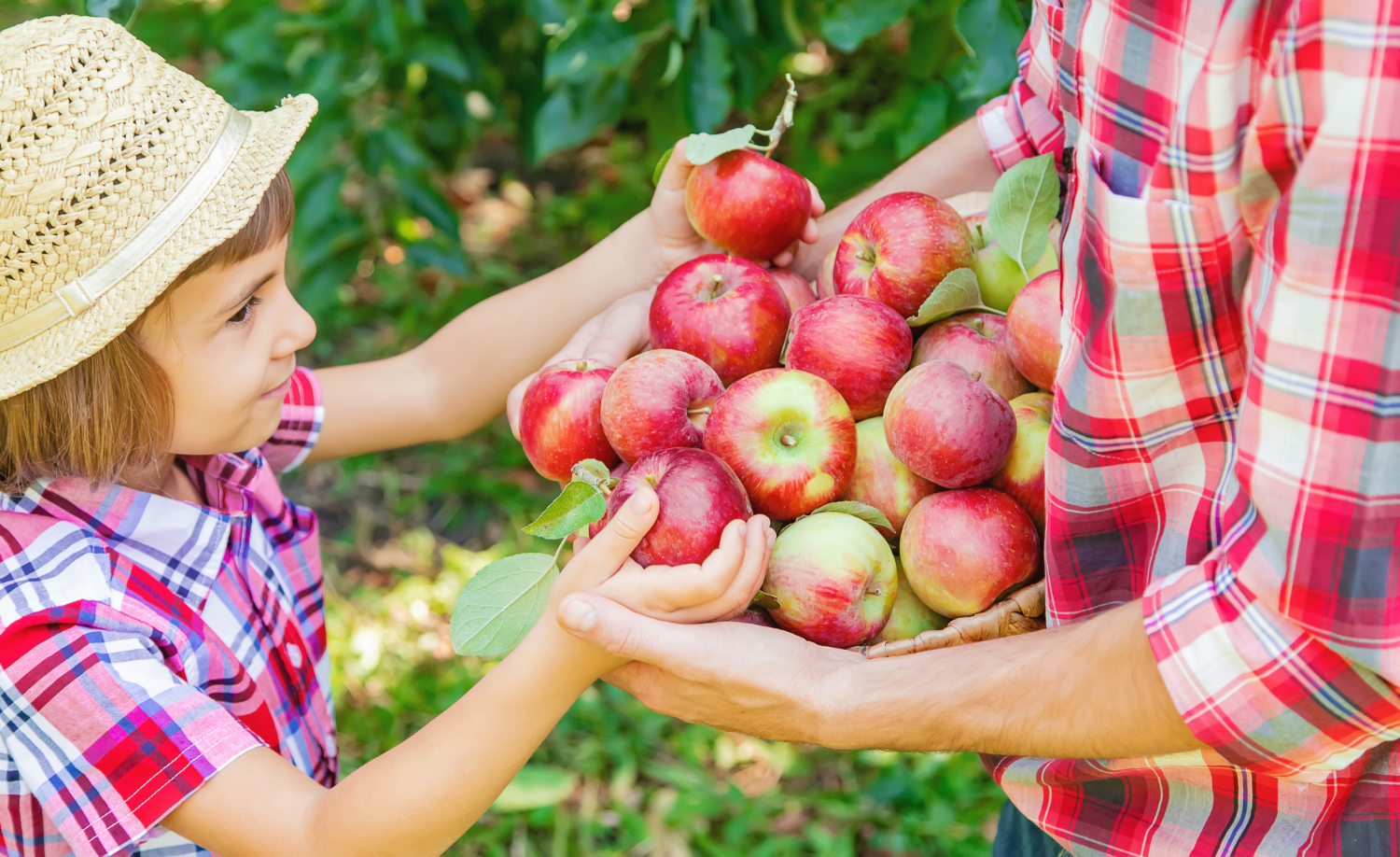
Many families bringing a toddler apple picking are also managing at least one other child. A little specific planning helps everyone actually enjoy the day together.
Different Ages, Different Paces
An older sibling can walk longer distances and follow more complex directions. A toddler often needs to be carried or moves much more slowly. This creates a genuine pacing mismatch worth planning around. Splitting up temporarily, if you have two adults along, lets each child move closer to their own natural pace. A single compromise pace often ends up frustrating everyone instead.
Involving an Older Sibling as a Helper
Many older children genuinely enjoy a small helper role. Holding the basket for a toddler’s picked apples. Pointing out good ones to reach for. This gives an older sibling a meaningful task. It also models gentle, careful apple handling for the toddler to observe and eventually imitate.
Managing Competing Interests
If your older child wants extended time at one attraction while your toddler has already lost interest, have a loose plan for trading off. Not every family member gets their ideal amount of time at every stop.
One-on-One Moments Still Matter
If possible, carve out even a few minutes of individual attention with each child during the visit, away from the sibling dynamic entirely. This adds real value alongside the shared family time.
Photography and Capturing the Day
A few practical thoughts on the photo-taking itself. It’s often a real part of why families make this specific trip, so it’s worth a little intentional planning too.
Snapping Photos in the Moment Versus Staging Them
Photos taken during genuine, ongoing activity, rather than paused, posed moments, often capture a more authentic, energetic version of your toddler’s actual experience. Both approaches are reasonable; knowing which one you’re prioritizing helps you actually get it.
Accepting the Photos You Get
A slightly blurry photo of a genuinely happy toddler mid-motion often means more, looking back, than a perfectly sharp but visibly reluctant posed shot. Letting go of a specific mental image of the “right” photo frees you up. You get to actually enjoy the moments as they happen.
A Quick Tip for Better Light
Early morning or late afternoon light tends to photograph more flatteringly than the harsh midday sun common at many fall orchard visits. Keep this in mind if photos are a real priority.
Common Obstacles With Apple Picking and Toddlers
A few specific situations come up often enough to address directly, drawn from what real families actually report running into on this exact trip.
“My toddler refuses to walk and wants to be carried the entire time.”
This is common, especially on unfamiliar, uneven terrain. Bring a baby carrier as a backup, even for a toddler who mostly walks at home. This solves the problem without turning it into a battle of wills mid-visit.
“We got there and the lines for everything were long.”
Visit on a weekday morning, if your schedule allows it. Or arrive right at opening time on a weekend. Both meaningfully reduce crowd-related waiting. If you’re already there and the lines are long, skipping a specific attraction rather than making a toddler wait extensively is a reasonable choice.
“My toddler had a complete meltdown and we left without picking anything.”
This counts as a complete, valid outing, not a failed one. A shortened visit that ends before things fall apart entirely is a better outcome than pushing through to a worse ending later.
“I don’t have anyone to help manage a toddler while I actually try to pick apples.”
Lower your own expectations for how many apples you’ll personally pick. Treat the visit primarily as toddler time, with some incidental apple gathering. This resolves the tension more easily than trying to do both fully at once.
“My toddler is scared of the animals or the loud tractor sounds.”
This is a genuine, common sensory response, not something to push through. Keep a comfortable distance from whatever specifically frightens your toddler, while still letting them observe from a safe, calm spot. This respects the reaction without requiring you to leave entirely.
“We’re worried about germs or illness from a crowded outdoor event.”
Outdoor settings genuinely carry lower transmission risk than indoor crowded spaces for most common illnesses. Still, hand sanitizer after touching shared surfaces like baskets or picking poles remains a reasonable precaution.
Adapting This to Every Family’s Situation
Budget. A simple, local farm with basic pick-your-own access keeps this outing genuinely affordable. Skip the paid extras, like hayrides and mazes.
Access to orchards. If a real orchard isn’t within reasonable driving distance, try a grocery store trip instead. Pair it with a simple, honest conversation about where apples come from, and one of our at-home apple activities.
Disability and mobility needs. Call ahead to ask specifically about accessible pathways. Many orchards have uneven, ungraded terrain that doesn’t accommodate a wheelchair or mobility device well. This helps you choose a location that genuinely works.
Different family structures. Whoever brings a toddler apple picking benefits from the same preparation. This holds true for one or two parents, a grandparent, or another caregiver, regardless of the family configuration.
Multilingual families. Every conversation and safety reminder in this guide translates directly into any language your family speaks at home.
Schedule constraints. If a full outing doesn’t fit this season, that’s a genuinely fine outcome. There’s no requirement that every fall include an orchard visit, especially for a toddler too young to remember it.
Sensory sensitivities. A toddler who finds crowds, loud tractor engines, or strong smells overwhelming may do better with a quieter weekday morning visit. A smaller, calmer operation genuinely helps too.
Working parents with limited weekend time. A short, focused visit still delivers the core experience. Even just 30 to 45 minutes at a nearby, simple farm works, without requiring a full day set aside.
Families managing a child’s specific medical needs. Confirm with orchard staff about any specific accommodations needed before you arrive, whether related to mobility, allergies, or another condition. This sets a smoother foundation for the actual visit.
Frequently Asked Questions
Questions About Timing and Age
Is apple picking actually worth doing with a toddler who won’t remember it? Many families find genuine value in the outing itself: the sensory experience, the family time, the photos. This holds true whether or not a toddler retains a specific memory of the day. This is a reasonable, personal call for each family to make.
What age is realistically “old enough” for apple picking? There’s no strict age requirement. Even a baby too young to walk can come along in a carrier. A toddler of any age can participate at whatever level matches their current mobility and interest.
Should we go early in the season or later? Early season visits tend to have better fruit selection and smaller crowds. Later season visits sometimes offer lower prices as orchards work through remaining fruit, though selection narrows. Neither timing is clearly better for a toddler specifically.
Questions About Gear and Logistics
Is it worth bringing a wagon or stroller? This depends entirely on your specific orchard’s terrain. Calling ahead to ask directly is more reliable than assuming either way, since paved, flat orchards and rough, hilly ones require genuinely different gear.
What should we do with all the apples once we get home? Decide ahead of time roughly how you’ll use them: eating fresh, baking, or applesauce. A large haul of apples can otherwise go to waste before your family works through it. Our at-home apple activities guide covers several genuinely useful ways to involve your toddler in this process too.
Is it safe to let my toddler pick apples directly off low branches themselves? Yes, for apples within easy, safe reach. This is a genuinely appropriate and enjoyable part of the experience for most toddlers. Supervise closely, and guide their hand gently, rather than letting them pull or yank at a branch. This helps protect both the tree and your toddler’s safety.
How do we handle a toddler who doesn’t want to leave when it’s time to go? Give a few minutes’ warning before the actual departure. Try “two more minutes, then we head to the car,” rather than an abrupt stop. This tends to ease the transition. A small, predictable closing ritual, like picking one last apple together, can also help signal that the visit is wrapping up.
Bringing Grandparents or Extended Family Along
A multi-generational visit adds real joy but also a few specific coordination points worth thinking through ahead of time, before everyone is already standing in a parking lot.
Aligning Expectations Beforehand
A grandparent or relative who hasn’t spent recent time with an actual toddler might carry an idealized picture of how the visit will go. A brief, honest conversation beforehand helps set shared, realistic expectations. Try “she might only last twenty minutes, and that’s completely normal.” This avoids disappointment or an awkward moment mid-visit.
Dividing Supervision Clearly
With more adults present, explicitly decide who’s primarily responsible for watching the toddler at any given moment. This prevents the common situation where everyone assumes someone else has it covered. A brief, direct conversation before you split up into different rows or activities solves this simply, before it becomes a real problem.
Letting Grandparents Have Their Own Moment
If a grandparent specifically wants a quiet moment with the toddler, build in a few minutes for that, away from the broader group’s pace. This can become a genuinely meaningful, cherished part of the day.
Managing Different Comfort Levels With Risk
Different generations sometimes hold different views on acceptable risk, like how closely to supervise near farm equipment or animals. Decide your own clear boundaries in advance, and communicate them calmly if needed. This helps navigate the situation without an in-the-moment disagreement in front of your toddler.
Building This Into a Simple Fall Tradition
A few thoughts on this outing beyond just this single year.
Repetition Builds Genuine Anticipation Over Time
A young toddler won’t remember this year’s specific visit. But repeating a similar outing across several years genuinely builds a family tradition your child will eventually recognize and look forward to.
Returning to the Same Orchard Has Real Advantages
Visiting the same orchard repeatedly across multiple years means you’ll already know the bathroom situation, the terrain, and roughly what to expect. This reduces the planning burden compared to researching a brand new location every season.
Adjusting the Visit as Your Toddler Grows
What works for a barely-walking one-year-old looks genuinely different from what works for a running, talking three-year-old. Revisit this guide’s sections each year as your child’s abilities and interests shift. This keeps your planning matched to who your child actually is right now, not who they were last season.
Managing Your Own Expectations as a Parent
A brief, honest note directed at you specifically, not just your toddler’s needs, since your own experience of the day matters too.
This Might Not Feel Relaxing, and That’s Fine
An outing with a toddler, even a genuinely enjoyable one, often involves real physical and mental effort. Carrying. Redirecting. Managing snacks and bathroom needs. Watching for hazards. Don’t expect this to feel like a relaxing personal outing. It’s an actively managed family activity, and expecting otherwise sets you up for unnecessary disappointment.
Your Own Needs Matter Too
Bring your own snack. Wear your own comfortable shoes. Build in a moment to actually look around and enjoy the scenery yourself, even briefly. This genuinely matters. A parent who’s completely depleted by the end doesn’t serve the day any better. Protecting a little of your own capacity along the way genuinely helps. This small effort pays off in your own mood too.
It’s Fine to Keep This Visit Short on Purpose
There’s no requirement to stay until your toddler is done enjoying themselves if you’ve reached your own reasonable limit first. A visit that ends because you decided it should, rather than only because your toddler melted down, is a completely valid, reasonable choice. It’s one worth making without guilt.
If Apple Picking Doesn’t Happen This Year
A brief, honest note for families where a real orchard visit simply isn’t realistic this season, whether due to distance, budget, timing, or simple exhaustion.
This Isn’t a Missed Milestone
A toddler, especially a very young one, has no fixed developmental need for an orchard visit specifically. Skipping it entirely for a season, for any reason, budget, schedule, health, or simple lack of interest, has no meaningful developmental consequence. A busy social media feed might suggest otherwise, but that’s not reality.
Simple At-Home Alternatives
A trip to a regular grocery store offers a smaller but genuinely real version of the same experience. Let your toddler help choose a few apples from the produce section. Pair this with a simple conversation about where apples come from. This keeps the seasonal connection alive, without needing a full outing or any special planning at all.
There’s Always Next Year
Apple picking seasons return every single year. A toddler’s genuine ability to engage with and remember the experience grows meaningfully with each passing year too. A missed season now isn’t a missed opportunity in any lasting sense. Next year’s visit will likely be an even richer experience for a slightly older, more engaged child.
Connecting the Orchard Visit to At-Home Activities
A brief bridge between this outing and what happens afterward, since the experience doesn’t need to end the moment you get back in the car.
Extending the Experience With Apples You Bring Home
The apples that make it home from your visit offer a genuine, natural extension of the day’s experience. Our guide to apple activities for preschoolers covers specific, hands-on ways to keep the theme going once you’re back home. A single outing can turn into a whole extended seasonal experience.
Talking About the Visit Afterward
Even a very simple conversation later, like “remember the apples we picked,” helps reinforce the experience. It gives your toddler language to process what they saw, even if they can’t yet describe it in detail.
Looking at Photos Together
Share a few photos from the visit with your toddler in the following days, narrating simply what’s happening in each one. This extends the value of the outing well past the actual day, and often becomes a delightful, repeated activity.
Your One Next Step
Pick a rough weekend from the calendar. Call or check your chosen orchard’s website for their bathroom facilities and toddler-specific policies. Put a reminder on your calendar for the 30-day mark to handle the rest, and let the rest of the plan fall into place naturally from there.
Whatever the actual day looks like, remember this. A shortened visit still counts. So does a skipped attraction, or a toddler more interested in a fallen leaf than the apples themselves. All are genuinely successful outings, worth every bit of the planning that got you there.
Sources consulted: HealthyChildren.org (American Academy of Pediatrics); standard pediatric choking-prevention guidance regarding whole, firm, round foods for children under age 4.